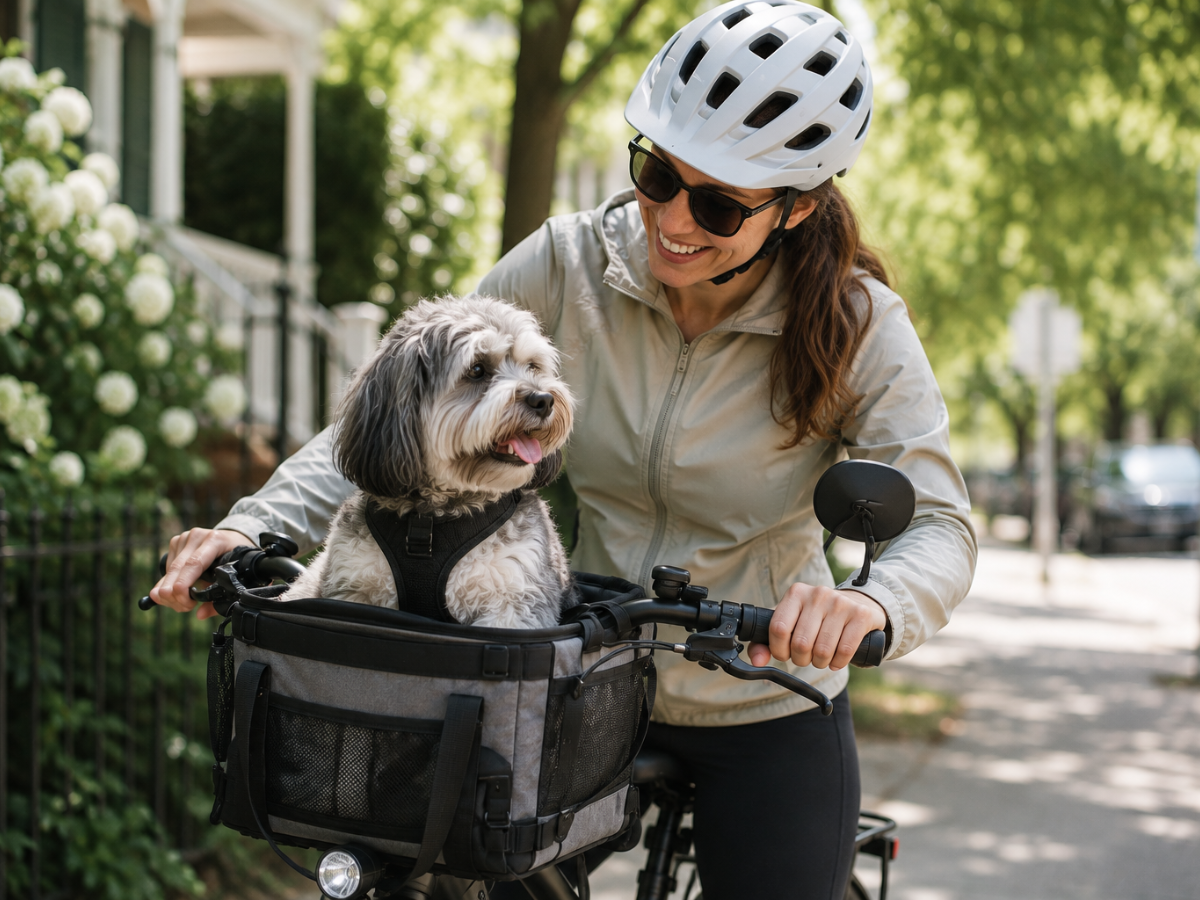
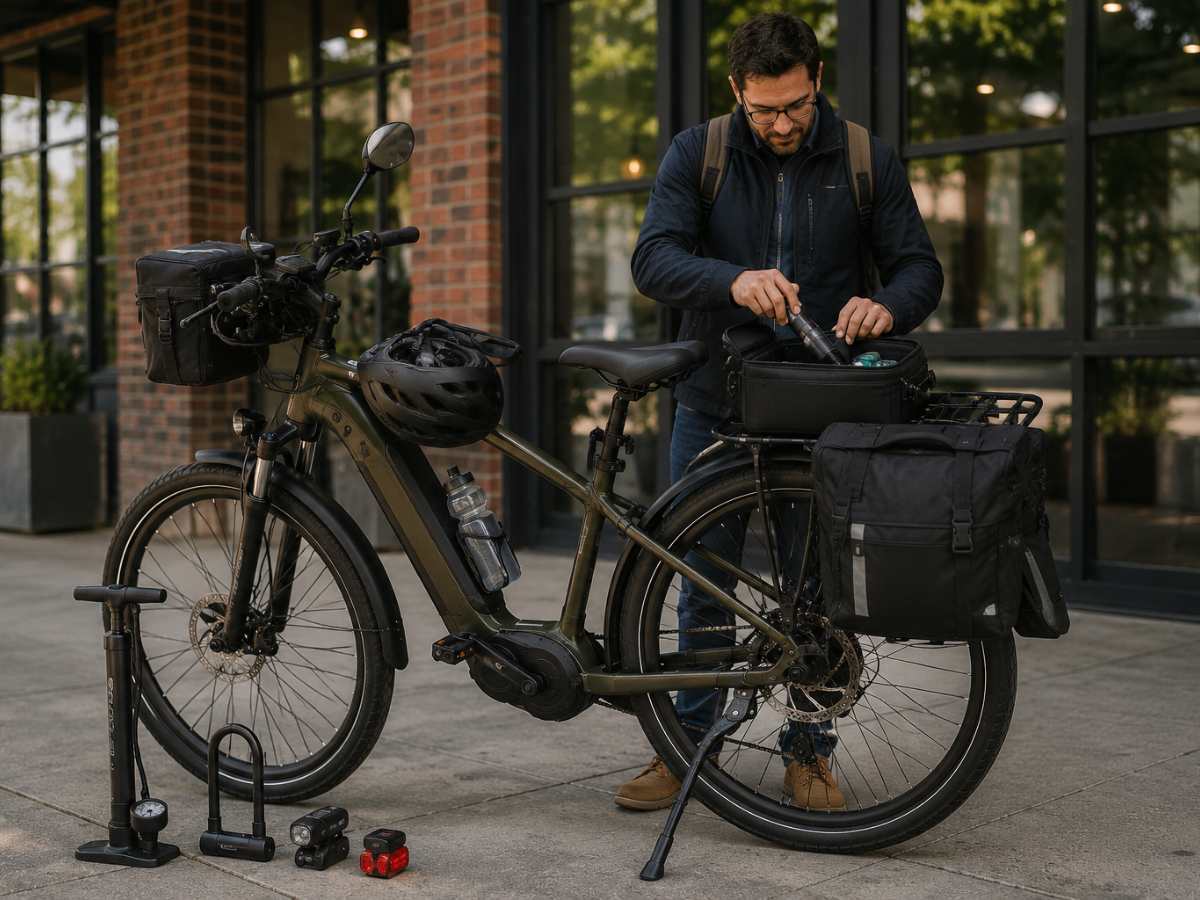
Bringing your pet along for an ebike ride can turn everyday trips into enjoyable adventures, but safety should always come first.
Whether you’re heading to the park, running errands, or exploring local trails, transporting a pet requires the right equipment, proper preparation, and an understanding of your animal’s comfort level.
Safe ebike pet transport starts with choosing a secure carrier or trailer, introducing your pet gradually, and following riding practices that minimize stress and reduce the risk of injury.
Factors such as your pet’s size, temperament, weather conditions, and route all play an important role in creating a positive experience.
This guide covers essential tips for traveling safely with your pet, helping you enjoy confident, comfortable rides while protecting your four-legged companion every mile of the way.
EBike Pet Transport Tips for Safe and Comfortable Rides
Why E-Bikes Work Well for Pet Transport
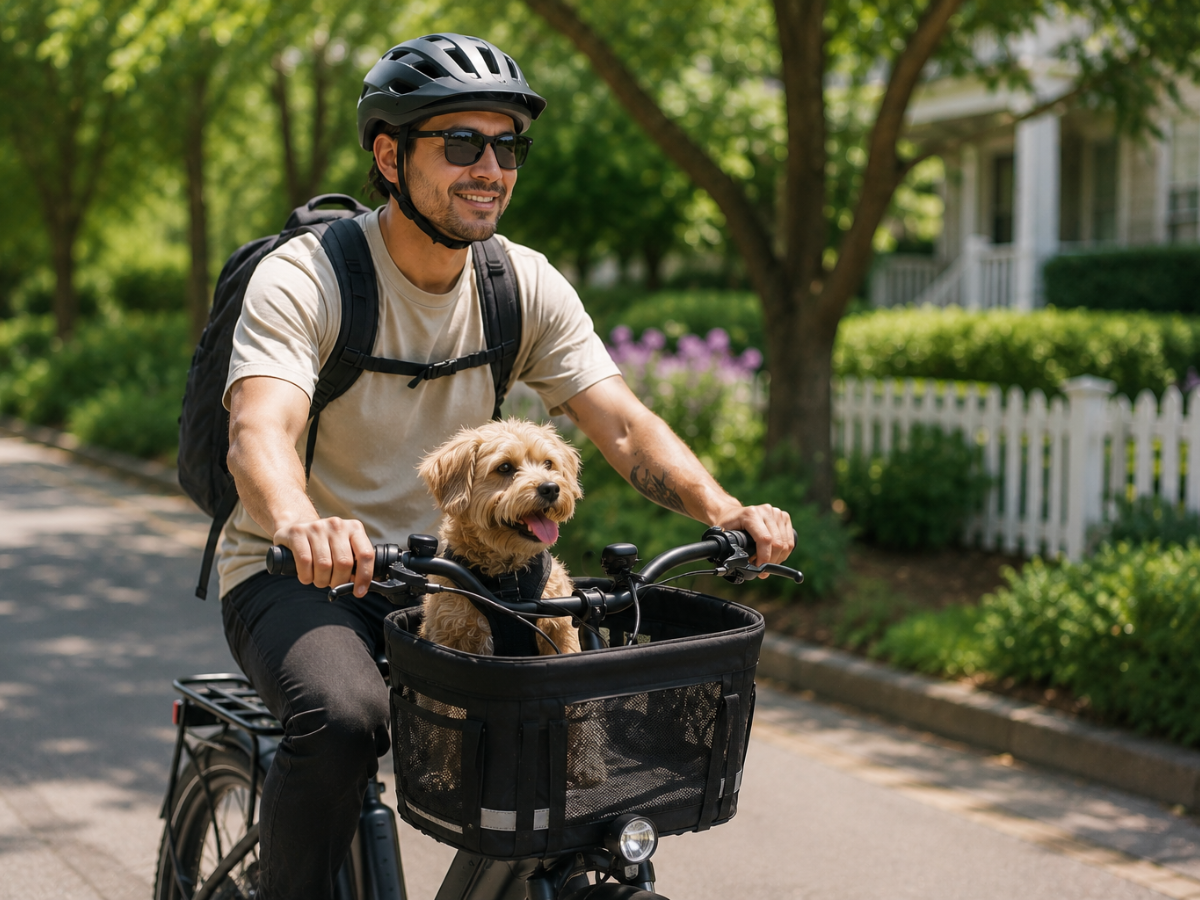
Carrying a pet by bike changes more than the total weight. It affects balance, acceleration, braking distance, cornering, and how quickly the bike responds when you need to stop. That makes the choice of bike and transport setup especially important.
For many riders, ebike pet transport is easier than carrying a pet on a conventional bicycle because pedal assistance helps manage the added load.
The motor can make starts, hills, and longer distances less physically demanding, which leaves the rider with more attention for steering, braking, traffic, and the pet itself.
That assistance does not remove the need for careful handling. A loaded e-bike still requires slower speeds, smoother inputs, and equipment that is rated for the combined weight being carried.
How Does Pedal Assist Help When Riding With a Pet?
The extra weight of a carrier, trailer, and pet is most noticeable when accelerating from a stop or climbing a hill. Pedal assist reduces the amount of force the rider needs to produce in those moments.
That can make several parts of the ride easier:
- Getting a loaded bike moving smoothly from a stop
- Maintaining momentum on hills
- Managing stop-and-go riding in neighborhoods or urban areas
- Reducing fatigue on longer trips
- Keeping acceleration more consistent with a heavier load
The key is to use assistance progressively rather than abruptly. A sudden surge of motor power can feel unsettling when a pet is riding in a basket or trailer. Start in a lower assist setting until you understand how the bike behaves with the added weight.
Which Type of E-Bike Is Best for Carrying a Pet?
There is no single best model for every pet. Size, weight, transport method, storage needs, and typical route all influence the decision.
| E-Bike Style | Often Best Suited For |
|---|---|
| Cargo e-bike | Larger loads, substantial rear racks, front cargo areas, and compatible pet-carrying setups |
| Cruiser e-bike | Relaxed neighborhood riding with smaller pets and an upright riding position |
| Hybrid e-bike | Paved roads, multi-use paths, and lighter carrier setups |
| Folding e-bike | Limited storage and smaller loads, provided the frame and rack are rated appropriately |
| Electric mountain bike | Varied terrain when used with a manufacturer-approved trailer or compatible transport system |
Do not choose solely by bike category. Check the manufacturer’s total payload rating, rear rack capacity, trailer compatibility, and any restrictions on attaching carriers.
The pet’s weight is only part of the calculation. You may also be carrying water, locks, bags, food, and other gear.
Should You Use a Basket, Carrier, or Trailer?
The safest and most practical option depends largely on the pet’s size and temperament.
Small pets may be suitable for a purpose-built basket or enclosed carrier when the bike and mounting system are rated for it. Larger dogs usually require a dedicated bicycle trailer or cargo setup because placing significant weight high on the bike can make handling less predictable.
Trailers keep the pet’s weight lower to the ground, which can help with stability, but they also change turning radius, braking distance, and the amount of space needed when passing obstacles.
Whatever system you choose, use equipment specifically designed to transport animals and follow its instructions for securing the pet. Improvised carriers or loose baskets are not appropriate substitutes.
Why Stability Matters More Than Speed
A powerful motor can help move additional weight, but speed should not be the priority in ebike pet transport.
Pet carriers and trailers can change the bike’s center of gravity and increase stopping distance. Fast corners, sharp steering inputs, or hard braking can make the ride uncomfortable and may destabilize the setup.
A more useful combination is predictable handling, reliable brakes, appropriate tires, and smooth motor assistance.
Before riding with your pet, practice with the carrier or trailer installed but empty. Test starts, turns, braking, and low-speed maneuvering in a quiet area. Adding a small amount of non-living weight can also help you understand how a loaded setup feels before introducing your pet.
How Can You Help Your Pet Get Comfortable With the Bike?
Do not assume a pet that enjoys car rides will immediately enjoy riding on an e-bike. Motor noise, movement, wind, traffic, and unfamiliar vibration can all be new experiences.
Introduce the carrier or trailer while the bike is stationary first. Allow your pet to explore it without immediately starting a ride. Once they appear relaxed, begin with very short trips in a quiet environment.
Watch for signs that your pet is uncomfortable, such as persistent attempts to escape the carrier, excessive vocalization, unusual panting, or difficulty settling. Some animals may simply prefer not to travel this way.
Comfort matters physically too. Make sure the pet has adequate space, ventilation, secure footing, and protection from excessive heat or direct sun.
What Should You Check Before Every Ride?
A pet-carrying setup adds components that deserve their own pre-ride inspection. Confirm that the carrier or trailer is securely attached, all latches and safety straps are functioning, tires are properly inflated, and nothing can contact the wheels or drivetrain.
Test the brakes before leaving, particularly with a heavier load. If using a trailer, inspect the hitch and any secondary safety connection recommended by the manufacturer.
The best ebike pet transport setup is not simply the one that can carry your pet. It is the one that keeps the bike within its rated limits, remains predictable to handle, and allows your pet to travel securely and comfortably.
How to Choose the Right Carrier for E-Bike Pet Transport
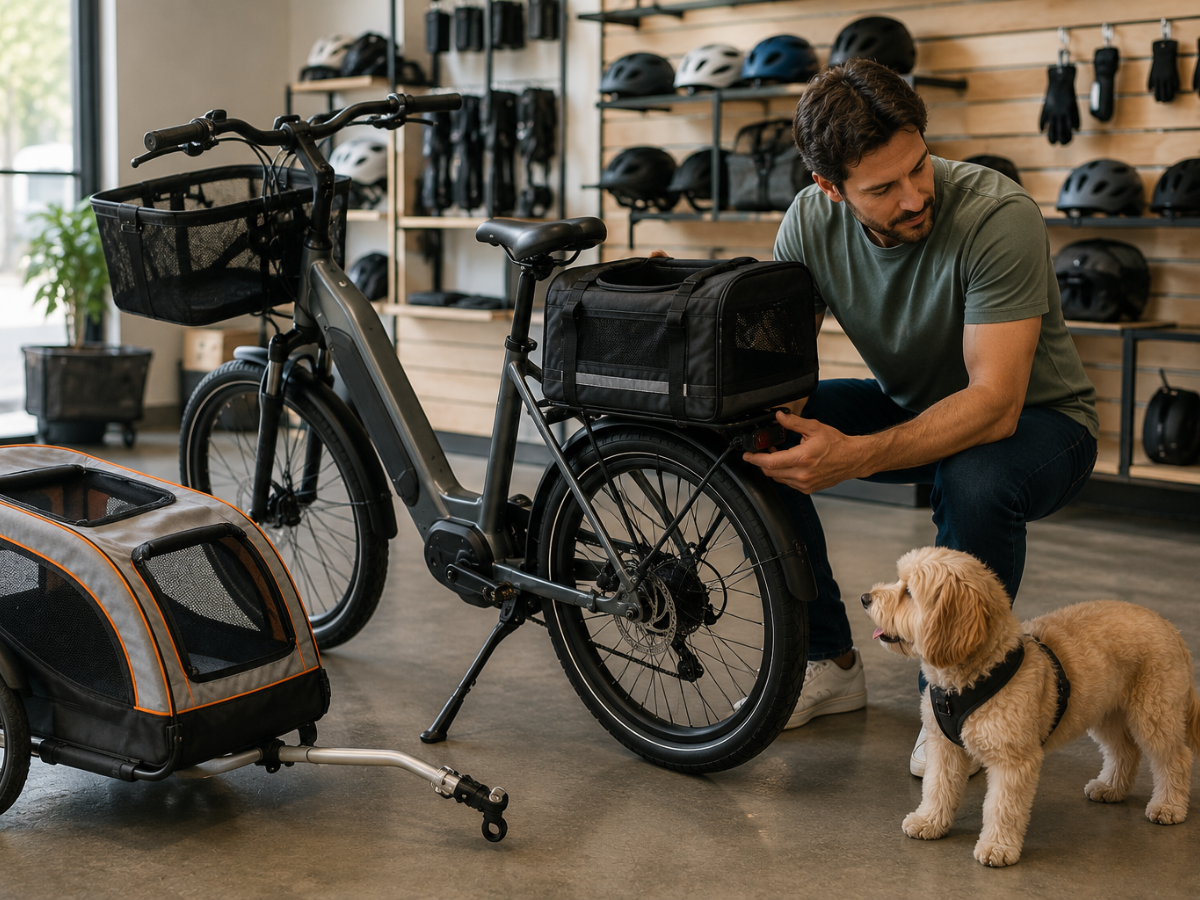
The best carrier is not simply the one that fits your pet. It also needs to work with your e-bike, stay within the bike’s weight limits, and remain stable on the roads or paths you normally ride.
For safe ebike pet transport, start with three questions: How large is your pet? How comfortable are they with movement and noise? And how will the added weight affect your bike’s handling? Those answers usually narrow the choice between a front basket, rear carrier, or dedicated trailer.
Which Pet Carrier Type Works Best for Your E-Bike?
Different setups solve different problems, and each changes the way the bike feels.
| Carrier Type | Best For | Main Advantage | What to Watch For |
|---|---|---|---|
| Front basket or carrier | Small, calm pets | Keeps your pet within sight | Can affect steering and usually has a lower weight limit |
| Rear-mounted carrier | Small to medium pets | Keeps the front of the bike less crowded | Added rear weight can change balance and low-speed handling |
| Enclosed pet trailer | Medium or larger pets | More space and a lower center of gravity | Requires more room for turns, stopping, storage, and parking |
Whatever option you choose, confirm that both the bike and carrier are rated for the load. A carrier that physically attaches to the frame is not automatically safe for the pet’s weight.
Check the e-bike manufacturer’s guidance for rack capacity, trailer compatibility, and total payload. Remember that payload includes more than the pet. The rider, locks, bags, water, cargo, and other accessories all count toward the total.
Match the Carrier to Your Route, Not Just Your Pet
Where you ride can change which setup makes the most sense.
A compact front or rear carrier may work well for short neighborhood rides, especially with a small pet that remains calm around traffic and movement. Longer recreational outings may be more comfortable with a trailer because the pet has more room and the weight sits lower.
Urban routes bring their own challenges. Frequent stops, narrow turns, curbs, parked cars, and crowded paths can make a wide trailer more cumbersome. On rougher pavement, however, a well-designed trailer with appropriate tires and suspension may offer a more stable experience than placing the same weight high on the bike.
Think through the entire trip, including where you will park and whether you need to maneuver the setup through gates, elevators, bike racks, or tight storage areas.
How Much Space Does Your Pet Need?
A carrier should be large enough for the animal to sit comfortably and settle into a stable position without feeling cramped.
For enclosed carriers or trailers, look for adequate ventilation and a secure floor that provides traction. Padding can make the ride more comfortable, but it should not slide around or interfere with ventilation.
The carrier should also prevent the pet from unexpectedly jumping out. Use the restraint system supplied or recommended by the carrier manufacturer, and avoid attaching a tether in a way that could create a choking or entanglement hazard.
If a pet cannot comfortably settle inside the carrier while it is stationary, it is unlikely to become more comfortable once the bike starts moving.
Introduce the Carrier Before Introducing the Ride
One of the most common mistakes in ebike pet transport is making the first carrier experience a moving bike ride.
Let your pet investigate the carrier at home or while the bike is stationary. Reward calm behavior and allow enough time for the space to become familiar. Once the pet is comfortable getting in and remaining there, move the bike by hand before progressing to a very short ride in a quiet area.
Increase distance gradually. A pet that seems relaxed for five minutes may become restless during a 45-minute outing, so early rides should be short enough to learn how they respond.
Watch for repeated attempts to escape, excessive panting unrelated to heat, persistent whining, trembling, or an inability to settle. Those signs may mean the animal needs more acclimation or that cycling is simply not a comfortable transport option for them.
What Features Matter Most in a Pet Carrier?
Comfort features are useful, but safety and compatibility should come first.
Look for secure mounting hardware, adequate ventilation, a stable base, appropriate weather protection, and clear manufacturer weight limits. Reflective materials or visibility features can also be useful, especially on trailers that extend behind the bike.
For trailers, inspect the hitch design and any secondary safety strap. The connection should allow the trailer to articulate through turns without loosening or interfering with the rear wheel.
For baskets and rear carriers, confirm that the attachment system is designed for the specific mounting location and that the carrier does not interfere with steering, braking, battery removal, or other controls.
Can You Carry a Child and a Pet at the Same Time?
Possibly, but this requires more planning than simply adding another accessory.
The safest approach is to treat passengers and pets as part of a total load-management problem. Check the bike’s maximum payload, individual rack limits, trailer restrictions, and the instructions for any child-carrying equipment.
Avoid stacking multiple heavy loads onto a single rack or improvising a setup that the bike manufacturer has not approved. In some cases, separating the loads, such as carrying a child on a properly equipped cargo bike while towing a compatible pet trailer, may produce a more stable arrangement.
A well-designed ebike pet transport setup should feel predictable before your pet ever gets onboard. Choose equipment around the pet’s size, the bike’s limits, your route, and the way the additional weight changes handling.
The right carrier is the one that keeps both rider and animal secure without making the bike difficult to control.
How to Ride Safely With Kids and Pets on an E-Bike
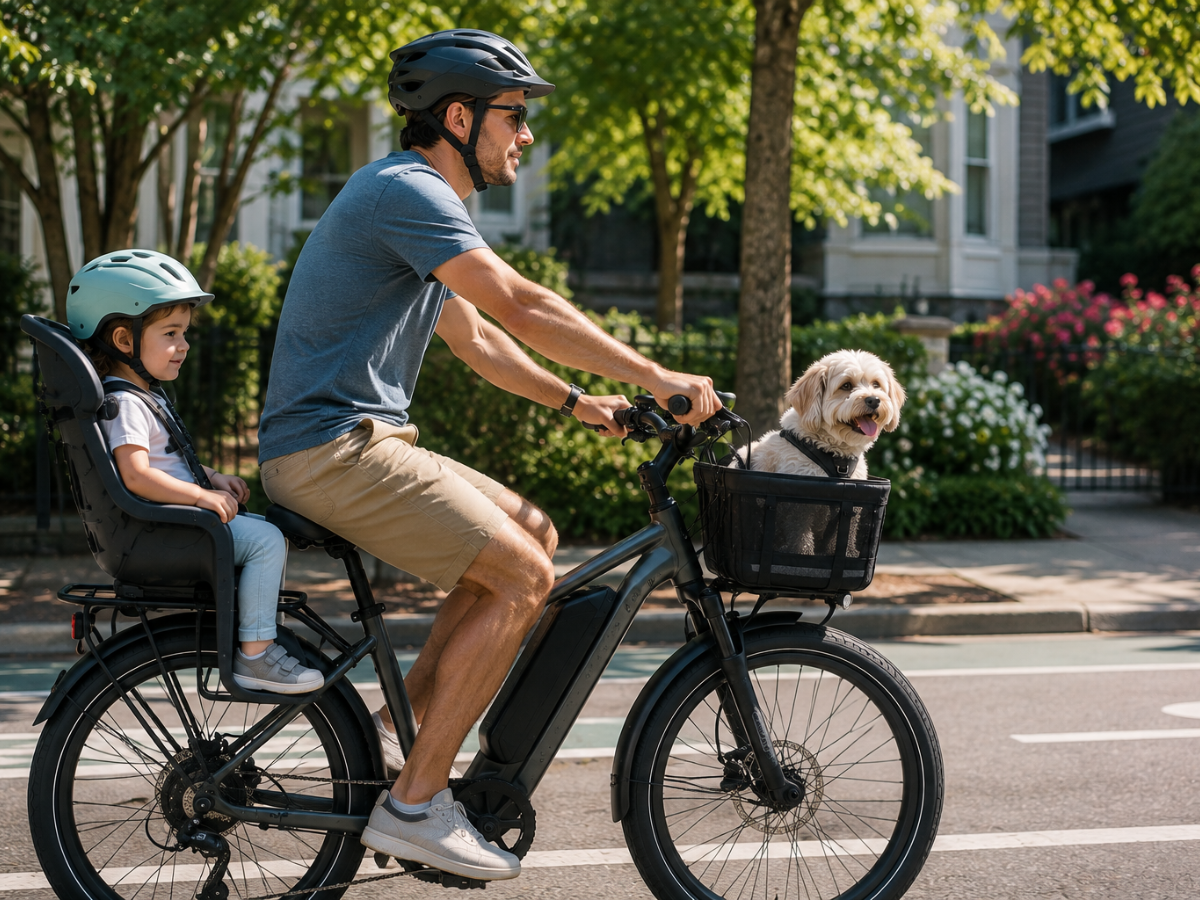
Carrying a child, pet, or both changes the way an e-bike behaves. Extra weight affects acceleration, braking distance, balance, and cornering, while a trailer or rear-mounted carrier can change the amount of space you need to maneuver.
Safe ebike pet transport therefore depends on more than having the right carrier. The bike must be within its rated load limits, every attachment needs to be secure, and your riding style should account for the additional weight before you enter traffic or a busy path.
Check the Entire Setup Before You Start Riding
A quick pre-ride inspection becomes even more important when another passenger is involved. Do not limit the check to the bike itself. Inspect the carrier, trailer, child seat, and any restraints as part of one complete system.
Before leaving, confirm that:
- The carrier, trailer, or child seat is securely attached according to the manufacturer’s instructions.
- The combined rider, passenger, pet, and cargo weight stays within the bike’s stated payload limit.
- Tires are inflated within the recommended pressure range.
- Both brakes engage normally and provide predictable stopping power.
- Trailer hitches, secondary safety straps, buckles, and latches are secure.
- Pet restraints are attached as intended by the carrier manufacturer.
- Bags, leashes, straps, and clothing cannot reach the wheels, chain, or other moving components.
- Front and rear lights are working when conditions call for additional visibility.
If anything has loosened or shifted since the previous ride, correct it before loading your child or pet.
How Should Your Riding Change With Extra Weight?
A loaded e-bike should be ridden more conservatively than an unloaded one.
Begin accelerating gradually so the motor does not produce an abrupt surge. Allow more room for braking, especially on downhill sections or when towing a trailer. Enter corners more slowly and avoid sharp changes in direction whenever possible.
Low-speed handling can feel different too. A rear carrier may make the bike feel heavier behind you, while a front carrier can affect steering. A trailer increases the overall length and width of the setup and can cut corners differently from the bike itself.
Practice those differences somewhere quiet before riding around traffic, pedestrians, or other cyclists.
Help Your Pet Get Comfortable Before the First Real Ride
Introducing a pet gradually is one of the most useful safety steps in ebike pet transport.
Start with the carrier or trailer on the ground or attached to a stationary bike. Give your pet time to investigate it without immediately closing them inside or beginning a ride.
Once they can remain relaxed in the carrier, walk the bike by hand. The next step can be a very short, slow ride in a quiet area. Increase distance only if the pet continues to settle comfortably.
Pay attention to behavior rather than assuming they will adjust automatically. Persistent attempts to escape, trembling, excessive vocalization, or an inability to settle may indicate that your pet needs more time or does not enjoy this form of transportation.
Choose Routes That Suit a Loaded E-Bike
A route that feels easy when riding alone may be less comfortable with a child seat, pet carrier, or trailer attached.
Where possible, favor routes with smoother pavement, lower vehicle speeds, fewer complicated intersections, and enough space to accommodate your full setup. Protected bike lanes and lower-traffic streets may be preferable to routes requiring frequent interaction with faster vehicles.
Trailer users should pay particular attention to narrow barriers, curb cuts, bollards, and tight turns. Remember that the trailer does not follow exactly the same path as the bicycle through a corner.
Plan stopping points as well. Longer rides are easier when you know where you can safely pull over for water, shade, or a break.
What Changes When You Carry Both a Child and a Pet?
Combining passengers increases the need to think about total weight and weight distribution.
Do not assume that because individual accessories fit the bike, they can safely be used together. A child seat, pet trailer, cargo rack, panniers, and rider weight may all count toward different component limits as well as the e-bike’s total payload rating.
Check the instructions for the bike and every carrying accessory involved. Pay particular attention to rack limits, trailer compatibility, passenger requirements, and whether the manufacturer permits the combination you have in mind.
If the setup feels difficult to balance, steer, or stop during a practice ride, reconsider how the load is distributed rather than trying to adapt by riding faster or using more motor assistance.
Practice Before Adding a Passenger
A test ride is useful even if you already own the bike. Install the carrier, child seat, or trailer and ride it empty first. Practice starting, stopping, turning, walking the bike, and maneuvering at low speed.
You can then add non-living weight within the accessory’s limits to better understand how a loaded setup behaves. Only after the bike feels predictable should you add a child or pet.
Atlanta riders who need help comparing e-bikes, payload limits, or compatible transport accessories can visit ElectroBike Georgia for local guidance and test rides.
Good ebike pet transport should feel controlled rather than improvised. Secure equipment, appropriate load limits, gradual practice, and smoother riding habits make it easier to include pets and children without turning a casual outing into an unnecessarily complicated ride.
How to Help Your Pet Get Comfortable With E-Bike Rides
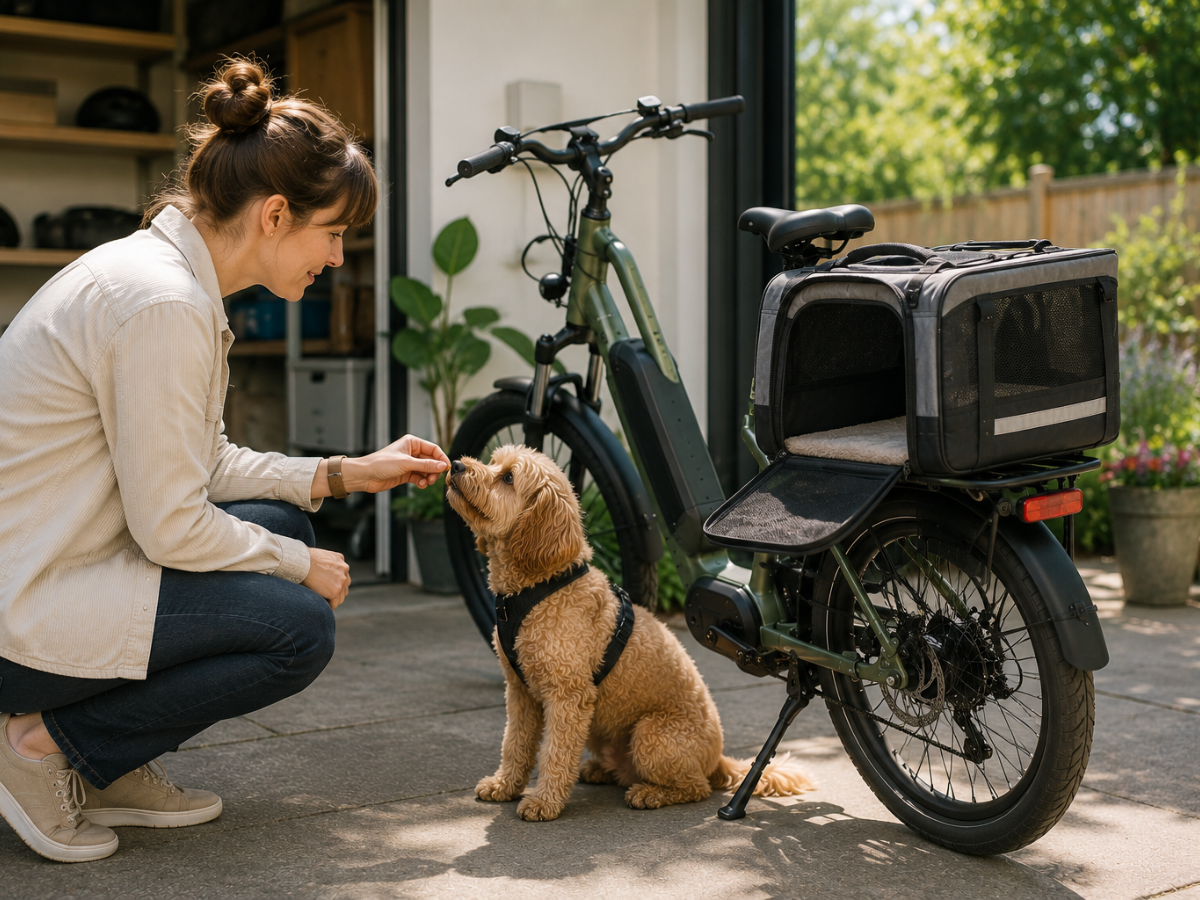
A secure carrier and properly equipped bike are only part of successful ebike pet transport. Your pet also has to become comfortable with an unfamiliar combination of confinement, movement, vibration, traffic noise, and changing surroundings.
That adjustment should happen gradually. Some pets settle into a carrier almost immediately, while others need several sessions before the bike even moves. Rather than working toward a particular distance, focus on whether your pet remains relaxed at each stage.
Start With the Carrier Away From the Bike
Introduce the carrier or trailer somewhere your pet already feels comfortable. Leave it open and allow them to investigate without being placed inside.
A familiar blanket or favorite toy can make the space feel less foreign. Treats may also help create a positive association if your pet is food-motivated.
Once your pet willingly enters the carrier, let them spend brief periods inside before introducing restraints, closing the enclosure, or attaching it to the bike. This separates several unfamiliar experiences instead of asking the animal to process everything at once.
Introduce the Bike and Movement Gradually
Once the carrier itself feels familiar, you can begin introducing the sensations associated with riding. A simple progression works well:
- Attach the carrier or trailer securely and let your pet sit inside while the bike remains stationary.
- Walk the bike by hand for a short distance.
- Take a brief ride somewhere quiet and familiar.
- Repeat short outings before gradually adding time and distance.
The goal is not to move through these steps on a fixed schedule. If your pet becomes uncomfortable at one stage, return to the previous one rather than pushing forward.
E-bikes introduce another consideration: motor sound and acceleration. Let your pet become familiar with those sensations at low speeds before using stronger levels of pedal assist.
Learn What Relaxed and Stressed Behavior Looks Like
Watching your pet during and after practice sessions can tell you whether the introduction is moving at an appropriate pace.
Signs of comfort may include willingly entering the carrier, settling into a normal sitting or lying position, calmly observing the surroundings, and behaving normally after the ride.
Stress can look different from one animal to another. Watch for repeated escape attempts, trembling, persistent vocalization, unusual restlessness, excessive panting unrelated to heat, or reluctance to approach the carrier after previous rides.
One behavior by itself does not always tell the whole story. Look for changes from your pet’s normal behavior and patterns that continue across multiple sessions.
If riding consistently causes significant distress, ebike pet transport may not be appropriate for that particular animal.
Make the First Rides Easy
Early rides are for acclimation, not mileage. Choose a quiet route with smooth pavement, low traffic, gentle turns, and convenient places to stop.
Keep acceleration and braking gradual. Sudden starts, hard stops, potholes, and fast corners can make an otherwise secure carrier feel unpredictable to the animal inside.
Start with only a few minutes if necessary. If your pet remains relaxed, you can gradually extend future outings.
Avoid making the first ride a long excursion simply because the first few minutes went well. Fatigue, heat, noise, and prolonged confinement can change how a pet responds later in the trip.
Plan for Heat, Water, and Breaks
Comfort during ebike pet transport also depends on conditions outside the carrier.
Enclosed trailers and carriers can become warmer than the surrounding air, particularly in direct sunlight. Choose equipment with adequate ventilation, monitor your pet during warm-weather rides, and stop somewhere shaded if they need a break.
For longer outings, carry water and provide opportunities to get out safely where appropriate. Check the floor and padding periodically as well. A surface that slides, bunches up, or becomes wet can make it difficult for a pet to remain stable while the bike is moving.
Weather can also be a reason to postpone a trip. Extreme heat, cold, heavy rain, or other uncomfortable conditions may turn a normally enjoyable ride into a stressful one.
Know When Your Pet Should Stay Home
Not every pet will enjoy riding, and even an experienced riding companion may have days when staying home is the better choice.
Skip the trip if your pet is unwell, injured, unusually anxious, or having difficulty settling before you leave. Pets recovering from an illness, injury, or medical procedure may also need additional precautions, so follow veterinary guidance about appropriate activity.
Age and mobility matter too. Senior pets or animals with physical limitations may need additional padding, easier entry and exit, shorter outings, or a different type of carrier.
Build a Routine Your Pet Actually Enjoys
Good ebike pet transport is not measured by how quickly your pet progresses from the driveway to a long ride. A better measure is whether they continue to enter the carrier willingly and remain comfortable once the bike starts moving.
Give them time to learn each part of the experience, keep early outings manageable, and adjust when their behavior tells you something is not working.
With the right pet, equipment, and gradual introduction, riding together can become a familiar routine rather than something the animal simply learns to tolerate.
Frequently Asked Questions About E-Bike Pet Transport
Is an E-Bike Better Than a Traditional Bike for Carrying a Pet?
An e-bike can make riding with a pet more manageable, particularly when the combined weight of the animal, carrier, and other gear makes starting or climbing hills more demanding. Pedal assist reduces the effort needed to get a loaded bike moving and can help the rider maintain a comfortable pace.
That does not automatically make an e-bike safer than a conventional bicycle. Safe ebike pet transport still depends on the bike’s payload capacity, carrier compatibility, braking performance, weight distribution, and the rider’s ability to control the loaded setup.
Extra motor power should never be used to compensate for a bike that feels unstable.
What Type of Carrier Is Best for a Large Dog?
For many larger dogs, a bicycle-specific pet trailer is more practical than a basket or rack-mounted carrier. Trailers generally provide more interior space and keep the animal’s weight lower rather than concentrating it over the front or rear of the bicycle.
Look beyond the dog’s weight when comparing options. The trailer should give your pet enough room to sit or lie comfortably, provide adequate ventilation, and include a secure attachment system. Check both the trailer’s weight rating and your e-bike manufacturer’s guidance on towing before purchasing.
Can Any Dog Ride on an E-Bike?
No. A dog’s temperament and physical condition matter just as much as its size.
Some dogs adapt easily to carriers and trailers, while others find the movement, traffic noise, confinement, or unfamiliar surroundings stressful.
Senior pets, puppies, animals with mobility limitations, and pets with health concerns may also require special consideration. A veterinarian can provide guidance if you are unsure whether riding is appropriate for your pet.
Introduce the carrier gradually and watch how your dog responds before attempting longer trips. Persistent trembling, escape attempts, unusual vocalization, or an inability to settle are signs that you may need to slow the introduction or reconsider riding together.
How Do You Get a Dog Used to an E-Bike Carrier?
Start with the carrier somewhere familiar rather than immediately attaching it to a moving bicycle. Allow your dog to enter and leave voluntarily, and use familiar bedding, toys, or treats to make the space more inviting.
Once your dog is relaxed inside, progress to sitting in the carrier while it is attached to a stationary bike. Next, walk the bicycle by hand. Short, slow rides in a quiet area can follow.
There is no need to rush from one stage to the next. Increase the distance only when your pet remains comfortable with the current step.
How Much Weight Can an E-Bike Carry?
There is no universal e-bike weight limit. Payload capacity varies by model and manufacturer.
The important number is the maximum payload specified for your particular bike. That total may need to account for the rider, pet, carrier, child seat, racks, bags, locks, and other cargo. Individual components, such as rear racks and trailers, can also have their own lower weight limits.
Before setting up an e-bike for pet transport, check the limits for both the bicycle and every load-bearing accessory. Staying within the bike’s total capacity does not override a lower limit on an individual rack or carrier.
What Should You Pack for an E-Bike Ride With Your Dog?
What you need depends on the weather, route, and length of the ride, but a few basics are useful for most outings:
- Fresh water and a portable bowl
- Waste bags
- Any restraint or harness required by the carrier manufacturer
- A non-slip mat or secure padding if appropriate for the carrier
- Treats if you use them for training and reinforcement
- A leash for breaks away from the bike
For longer rides, plan places where your dog can safely get out, drink water, and take a break. In warm weather, pay particular attention to shade and airflow inside enclosed carriers or trailers.
Can You Use a Regular Pet Basket on an E-Bike?
Not necessarily. A basket that fits physically may still be unsuitable for carrying a live animal.
Check its stated weight capacity, mounting method, dimensions, and whether the manufacturer specifically intends it for pet transport. The mounting system should remain secure under movement and should not interfere with steering, cables, brakes, or other controls.
Front-mounted carriers can also affect steering as pet weight increases, while rear-mounted options change weight distribution behind the rider. Test the bike carefully before taking your pet along.
Can You Tow a Pet Trailer With Any E-Bike?
Trailer compatibility should be confirmed rather than assumed. Hitch systems attach differently depending on the bicycle and may not work with every axle, frame, motor configuration, or drivetrain.
Check the instructions for both your e-bike and the trailer. If either manufacturer restricts trailer use or requires specific hardware, follow those recommendations rather than improvising an attachment.
Where Can You Find a Pet Carrier That Fits Your E-Bike?
Start with your e-bike model, payload capacity, and approved mounting or towing options. Those details help narrow the search before you compare carrier size or convenience features.
A knowledgeable e-bike retailer can also help determine whether a particular basket, rack-mounted carrier, or trailer is compatible with the bike you own. For Atlanta-area riders, ElectroBike Georgia can help with e-bike and accessory compatibility.
The best ebike pet transport setup is not necessarily the largest or most elaborate. It is one that stays within the equipment’s limits, handles predictably, gives your pet enough room to remain comfortable, and suits the routes you plan to ride.
Conclusion
Transporting your pet on an e-bike can be a safe and enjoyable experience when you use the right equipment, prioritize proper training, and follow essential safety practices.
Choosing a secure carrier, helping your pet become comfortable with the ride, and performing routine equipment checks can make every outing more enjoyable for both of you.
Whether you’re planning short neighborhood rides or longer adventures, the right e-bike setup can provide comfort, convenience, and peace of mind. For quality e-bikes, accessories, and expert guidance, choose ElectroBike Georgia.
If you’re ready to find the perfect e-bike and accessories for riding with your pet, call (404) 400-7132 to speak with the team at ElectroBike Georgia or contact us today to get started.