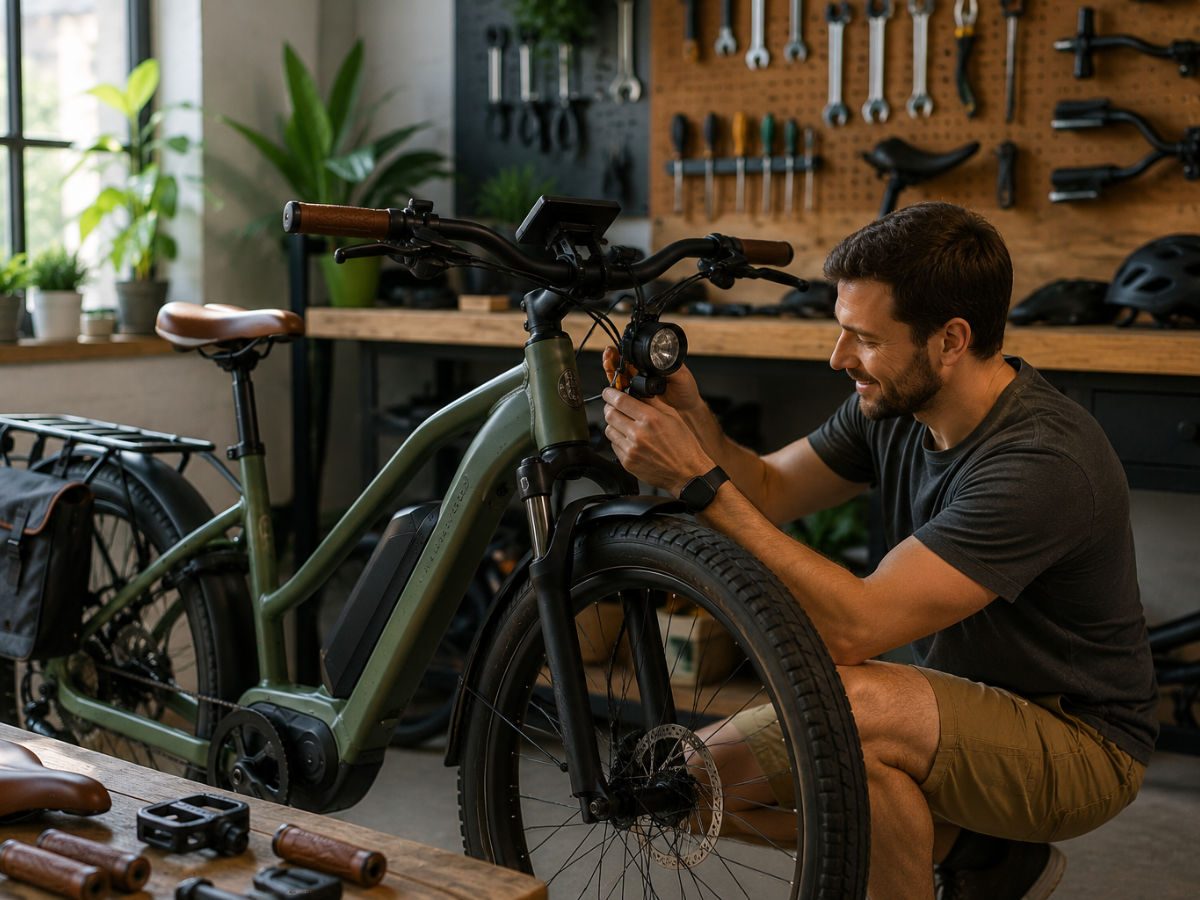
Every season brings different challenges for e-bike riders. Summer heat, winter moisture, autumn leaves, and spring rain can all affect battery performance, traction, braking, and overall bike maintenance.
Adapting your riding habits and care routine throughout the year helps keep your e-bike operating safely and efficiently in changing conditions.
Seasonal e-bike care and riding tips focus on protecting key components, extending battery life, and preparing your bike for varying weather and terrain.
Simple tasks like cleaning after wet rides, checking tire pressure, inspecting brakes, and storing the battery correctly can improve performance while reducing unnecessary wear.
This guide shares practical maintenance and riding strategies to help you enjoy safer, smoother, and more reliable e-bike adventures in every season.
How Seasonal EBike Care Keeps Your Bike Ride-Ready
How Should You Prepare Your E-Bike for a New Season?
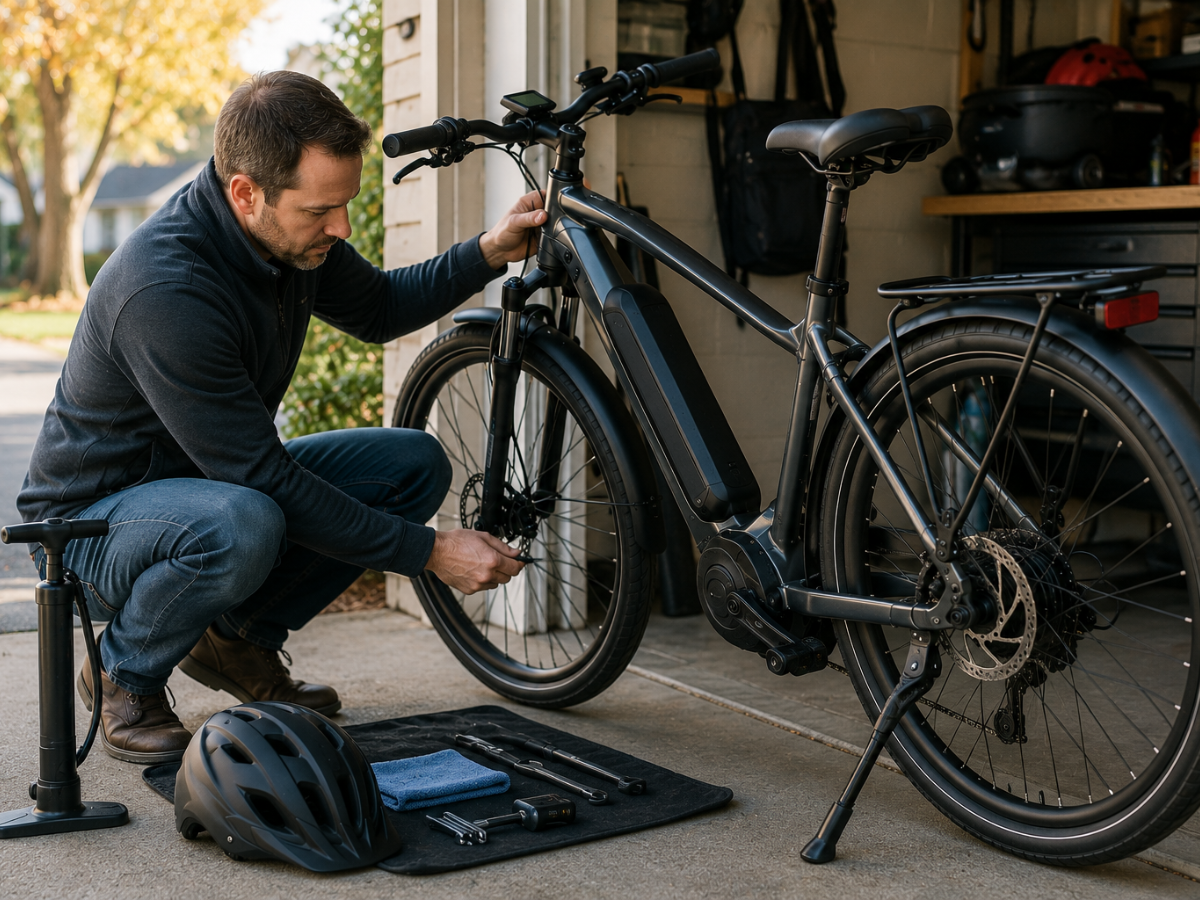
An e-bike can feel perfectly fine at the end of one riding season and still need attention before the next. Temperature changes, storage, moisture, and periods of heavy use can affect tire pressure, battery performance, brakes, and drivetrain components even when the bike has not developed an obvious problem.
A good seasonal ebike care routine is less about performing major maintenance every few months and more about catching small changes early. Before returning to regular riding, inspect the systems that affect safety and reliability, then take a short test ride before committing to a longer trip.
Check the Battery Before Your First Long Ride
The battery deserves particular attention because both storage conditions and temperature can affect its performance. If the bike has been sitting unused for several weeks or months, inspect the battery and its mounting area before charging or riding.
Look for visible damage, swelling, corrosion, or anything unusual around the battery casing and connections. A battery showing signs of physical damage should not be charged or used until it has been professionally assessed.
When everything appears normal, follow the manufacturer’s charging instructions and use the charger designed for that battery. Make sure the battery mounts securely to the bike and confirm that the display recognizes it correctly.
Battery capacity is commonly expressed in watt-hours (Wh), which describes how much energy the battery can store. That rated capacity does not simply change because the weather gets colder, but low temperatures can temporarily reduce battery performance and riding range. Factor that into your route planning rather than assuming you’ll get exactly the same range year-round.
Inspect the Components That Affect Safety and Ride Quality
A seasonal inspection should cover more than the electrical system. Tires can lose pressure while a bike sits unused, brake components wear over time, and drivetrains collect dirt that can affect shifting.
| Component | What to Check |
|---|---|
| Tires | Recommended pressure, tread condition, cuts, cracks, or other visible damage |
| Brakes | Pad wear, braking response, rotor condition, and normal lever feel |
| Chain and Drivetrain | Dirt, corrosion, lubrication, and smooth shifting |
| Lights | Proper operation of front and rear lights |
| Racks and Accessories | Loose fasteners, mounts, baskets, fenders, and mirrors |
| Electrical System | Display operation, pedal assist, connections, and unusual error messages |
Use your bike manufacturer’s recommended tire pressures, lubricants, adjustment procedures, and maintenance schedule rather than relying on one set of instructions for every e-bike.
What Should You Check After Winter Storage?
A bike returning from winter storage deserves a more thorough inspection than one ridden regularly.
Begin with the tires and brakes before testing the electrical system. Check that the wheels rotate normally, the brakes engage properly, and the drivetrain shifts through the gears without unusual resistance or noise. Inspect the battery and electrical contacts for signs of damage or moisture.
If a removable battery has been stored somewhere cold, follow the manufacturer’s guidance on bringing it to an appropriate temperature before charging. Lithium-ion batteries should not be charged when they are below the temperature range specified by the manufacturer.
Once the basic checks are complete, take a short ride close to home. Test the brakes, shifting, display, motor assistance, and different pedal-assist settings at moderate speeds. A controlled first ride gives you an opportunity to notice problems before they become inconvenient or unsafe farther from home.
How Does Seasonal E-Bike Care Change Throughout the Year?
Seasonal ebike care should respond to riding conditions rather than follow exactly the same checklist every few months.
Spring is a natural time for a post-storage inspection and drivetrain cleaning. During hot summer weather, pay closer attention to battery storage and avoid leaving the battery in excessively hot environments when possible. Wet or dirty riding conditions may require more frequent cleaning and drivetrain care, while colder weather calls for extra attention to battery performance, range, and storage.
The goal is not to overhaul the bike every season. It is to adjust maintenance according to what the bike has been exposed to.
When Should You Schedule Professional E-Bike Service?
Some warning signs deserve more than a home inspection. Have the bike professionally evaluated if you notice inconsistent motor assistance, recurring error messages, unusual noises, worsening brake performance, shifting problems, damaged electrical components, or a noticeable change in battery behavior.
Service frequency should depend on the manufacturer’s recommendations, mileage, riding conditions, and how heavily the bike is used. A daily commuter may need professional attention sooner than someone who rides occasionally on weekends.
For Metro Atlanta riders, ElectroBike Georgia can provide local maintenance and repair support when seasonal checks uncover something that needs professional attention.
A few minutes of inspection at each seasonal transition can make problems easier to spot and help keep the bike dependable. Combined with routine maintenance throughout the year, seasonal ebike care gives riders a practical way to protect the battery, mechanical components, and overall riding experience.
How Should You Care for Your E-Bike Throughout the Year?
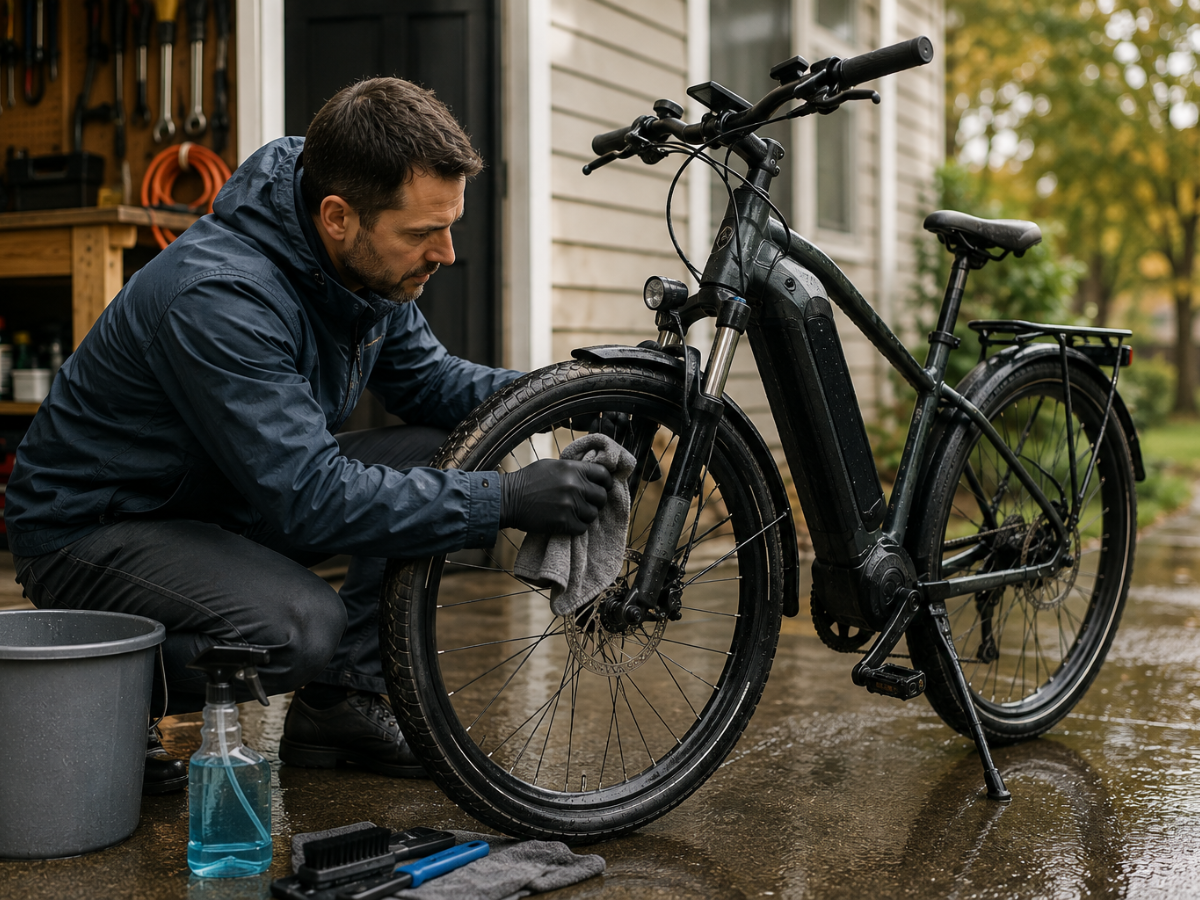
E-bike maintenance should change with the conditions you ride in. Heat can be hard on batteries, wet roads expose components to moisture and grime, and temperature changes affect tire pressure and battery performance.
A bike used for daily commuting will also need more frequent attention than one ridden occasionally on weekends.
That makes seasonal ebike care less about following a rigid calendar and more about responding to weather, mileage, storage, and riding conditions. Regular inspections can catch worn brake pads, underinflated tires, drivetrain buildup, and battery concerns before they interfere with a ride.
What Should You Check at the Start of Each Season?
A seasonal inspection does not need to involve taking the bike apart. Focus first on the components that affect safety, reliability, and everyday performance.
| Component | What to Check |
|---|---|
| Battery | Physical condition, connections, secure mounting, and normal charging behavior |
| Tires | Recommended pressure, tread wear, cuts, cracks, and other damage |
| Brakes | Pad wear, braking response, rotor condition, and lever feel |
| Chain and Drivetrain | Dirt buildup, lubrication, corrosion, and smooth shifting |
| Lights and Electronics | Lights, display, controls, pedal assist, and error messages |
| Accessories | Loose racks, baskets, fenders, mirrors, and other mounted equipment |
Use the manufacturer’s specifications when checking tire pressure, battery care, lubrication, and service intervals. Maintenance requirements can vary considerably between e-bike models and drive systems.
How Should You Protect an E-Bike in Hot Weather?
Summer creates two separate maintenance concerns: heat and increased use. Riders often put more miles on their bikes during warmer months, while batteries may spend more time exposed to high temperatures.
Avoid storing the battery in an excessively hot location, such as a closed vehicle sitting in direct sunlight. When possible, keep the bike and battery somewhere dry and protected from extreme temperatures.
Dry conditions can also mean more dust and grit around the drivetrain. If the chain begins looking dirty or sounding rough, clean it and apply an appropriate bicycle chain lubricant rather than simply adding more lubricant over accumulated grime.
Tire pressure deserves attention as temperatures change as well. Check it against the manufacturer’s recommended range rather than relying on how firm the tire feels.
How Does Cold Weather Change E-Bike Maintenance?
Lithium-ion batteries typically provide less usable performance in cold conditions, which can translate into reduced riding range. That temporary change does not necessarily mean the battery has deteriorated.
Plan more conservatively when riding in colder weather, particularly if your route normally uses most of the battery’s available range. Follow the battery manufacturer’s instructions for charging and temperature limits, especially after the battery has been exposed to very cold conditions.
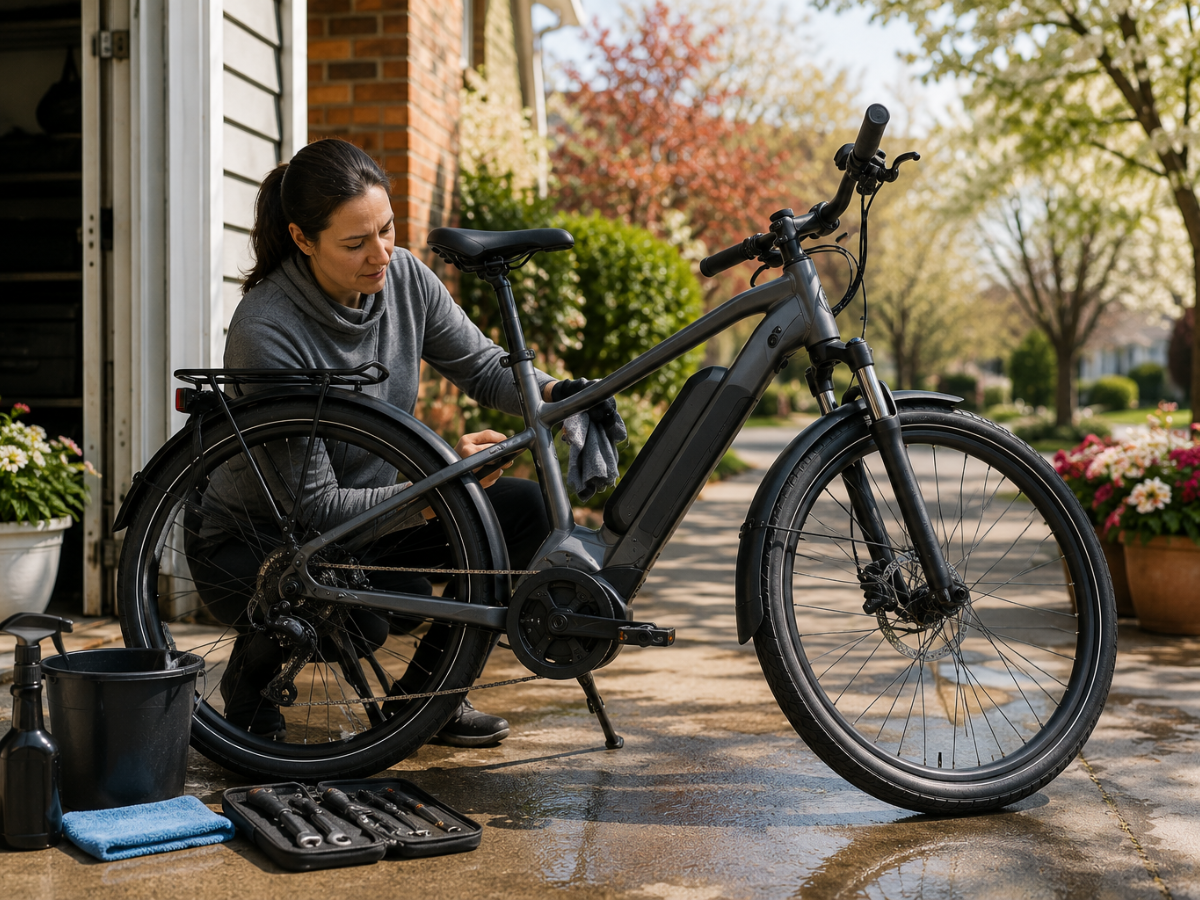
Winter and wet-weather rides can also introduce moisture, mud, grit, and road contaminants to mechanical components. Wipe the bike down after dirty rides and pay particular attention to the drivetrain, brakes, and exposed metal parts.
For longer periods of non-use, follow the manufacturer’s recommended battery charge level and storage conditions. Leaving a lithium-ion battery unused for months without considering its state of charge can affect its long-term health.
Should Rainy Weather Change Your Maintenance Routine?
Yes. An e-bike designed for everyday riding can handle appropriate exposure to normal weather according to its manufacturer’s specifications, but water resistance should not be confused with complete waterproofing.
After riding in rain, dry the bike and inspect areas where dirt and water tend to collect. The chain and drivetrain may need cleaning and lubrication more frequently when conditions stay wet.
Avoid directing high-pressure water at the motor, battery connections, bearings, display, or other electrical components when cleaning the bike.
If the bike has been exposed to unusually heavy water or you notice moisture around electrical connections, unusual motor behavior, or display errors afterward, have it inspected rather than continuing to ride and hoping the problem disappears.
How Often Does an E-Bike Need Professional Service?
There is no single annual service interval that works for every e-bike. A high-mileage commuter ridden throughout the year may need attention much sooner than a recreational bike used a few times each month.
Follow the manufacturer’s maintenance schedule and pay attention to how the bike feels. Brake problems, rough or inconsistent shifting, unusual motor noises, recurring error codes, loose components, or changes in battery behavior are reasons to schedule service rather than wait for the next seasonal inspection.
Professional servicing is particularly valuable for work involving the motor, battery, electrical connections, hydraulic brakes, or proprietary drive-system components that are not intended for routine home repair.
Build Seasonal E-Bike Care Around How You Actually Ride
The most useful seasonal ebike care schedule is one that reflects real use. A bike ridden through Atlanta’s summer heat and frequent rain may need a different routine from one stored indoors and used primarily on mild weekends.
For Metro Atlanta riders, ElectroBike Georgia provides local e-bike maintenance, repairs, and service support when a seasonal inspection uncovers something that requires professional attention.
Checking the bike periodically, cleaning it when conditions demand it, and addressing changes in performance early can do more for long-term reliability than waiting for a fixed annual tune-up. The goal is simple: maintain the bike according to what it has been through, not just what month appears on the calendar.
How Can You Keep Your E-Bike in Great Condition Year-Round?
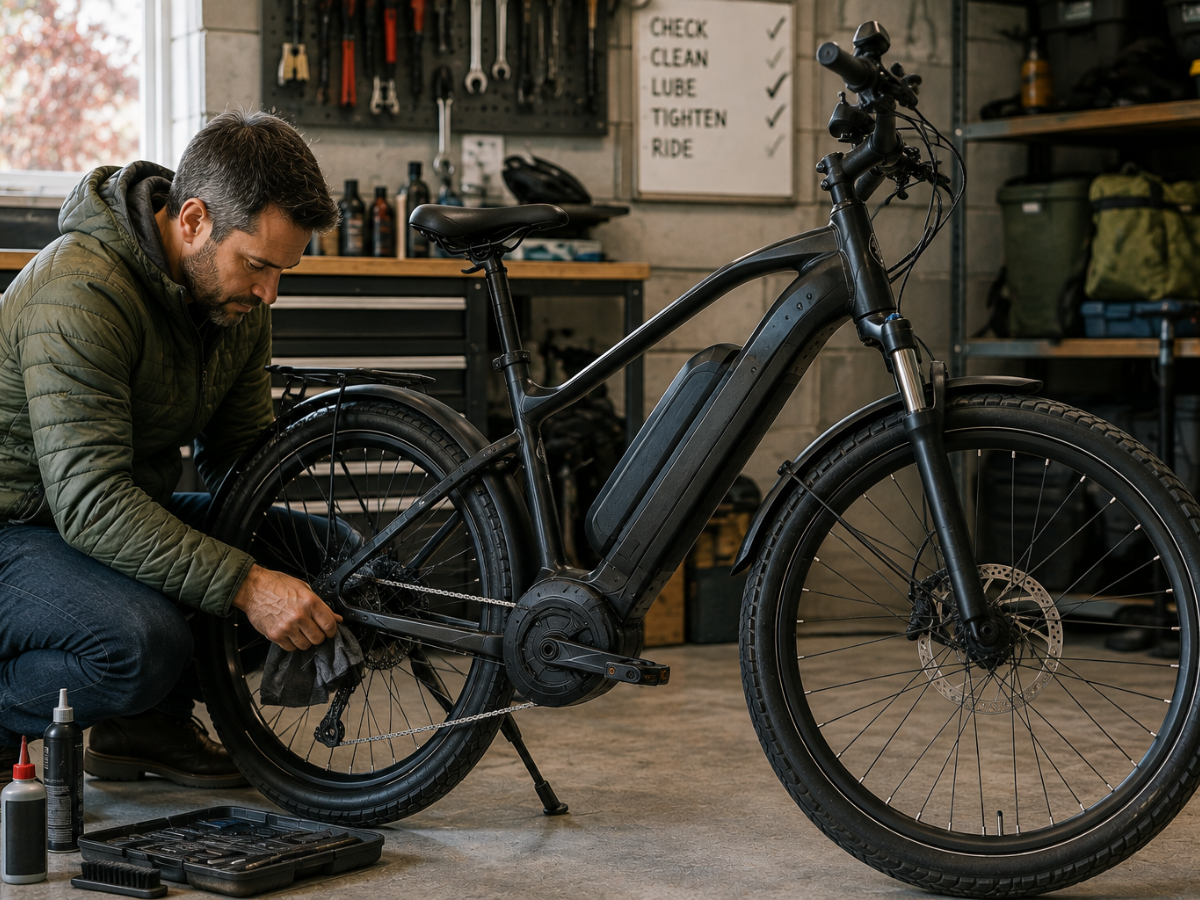
The best maintenance schedule is not necessarily the one with the most tasks. It is the one you can follow consistently. Instead of waiting for an unusual noise, declining brake performance, or a battery problem to prompt a visit to the shop, build maintenance into the way you use your bike throughout the year.
Seasonal ebike care provides a useful framework. Each change in weather becomes a reminder to inspect the bike, account for recent riding conditions, and deal with wear before it begins affecting reliability.
Build Your Maintenance Schedule Around Mileage and Conditions
A calendar can remind you to check your bike, but mileage and riding conditions often tell you more about what it actually needs. Someone commuting five days a week in rain and traffic will put very different demands on an e-bike than someone taking occasional recreational rides.
A practical routine includes:
- Check tires and brakes regularly. Look for changing tire pressure, tread damage, brake-pad wear, and any difference in braking response.
- Keep the drivetrain clean. Remove accumulated dirt before applying an appropriate chain lubricant, particularly after wet, muddy, or dusty rides.
- Pay attention to battery behavior. Follow the manufacturer’s instructions for charging, storage, and temperature limits, and investigate noticeable changes in range or charging behavior.
- Inspect fasteners and accessories. Racks, fenders, baskets, mirrors, and other attachments can loosen with regular riding.
- Respond to changes instead of waiting for failure. New noises, rough shifting, brake problems, motor irregularities, or recurring error messages deserve attention.
The important distinction is that these are checkpoints, not rigid once-per-season tasks. High-mileage riders may need to perform some of them much more frequently.
Know What You Can Maintain at Home and What Needs a Technician
Many routine jobs are approachable for owners. Checking tire pressure, cleaning the bike, inspecting visible components, and basic drivetrain care can all become part of normal ownership.
Electrical and mechanical problems are different. Motor diagnostics, battery faults, hydraulic brake problems, wheel or bearing issues, and proprietary drive-system servicing may require specialized equipment or training.
Trying to turn every repair into a DIY project can create unnecessary risk. If the bike develops an electrical error, inconsistent motor assistance, unusual battery behavior, significant braking problems, or a mechanical issue you cannot confidently diagnose, professional service is the better next step.
Do You Really Need an E-Bike Tune-Up Every Season?
Not necessarily. A lightly used e-bike does not automatically need four professional tune-ups every year simply because the seasons changed. Likewise, a heavily used commuter should not necessarily wait a full year between services.
Check the maintenance schedule supplied by the bike and component manufacturers, then adjust according to mileage, riding environment, and performance.
Frequent stop-and-go riding can accelerate brake wear, while wet or dirty conditions may increase drivetrain maintenance needs. Carrying heavy loads and riding substantial mileage can also shorten the interval between inspections.
Using seasonal transitions as reminders still makes sense. They give you regular opportunities to decide whether the bike needs basic home maintenance or professional attention.
Account for Atlanta’s Riding Conditions
Local conditions are another reason maintenance should not be completely calendar-based. Atlanta riders may encounter high summer temperatures, humid conditions, heavy rain, pollen, road debris, and periods of frequent year-round riding.
During hotter months, battery storage deserves particular attention. Wet-weather riding can mean more frequent drivetrain cleaning, while changing temperatures make tire-pressure checks especially worthwhile.
This is where seasonal ebike care becomes genuinely useful. Instead of doing exactly the same maintenance every three months, you respond to what the bike has actually experienced.
Keep a Simple Record of Maintenance and Repairs
One easy habit can make long-term maintenance much easier: keep track of what has been done.
Record major services, tire replacements, brake work, drivetrain components, battery concerns, and other repairs. You do not need a complicated spreadsheet. A note on your phone with the date, approximate mileage, and work completed is enough.
Over time, that history can help you recognize recurring problems and remember when wear components were last replaced. It also gives a technician useful context when diagnosing a new issue.
Make Seasonal E-Bike Care Part of Ownership
Good maintenance is ultimately preventative rather than reactive. Pay attention to changes in how the bike sounds, feels, brakes, shifts, charges, and delivers motor assistance. Small differences are often easier to address before they develop into larger problems.
For Metro Atlanta riders who need professional support, ElectroBike Georgia provides local e-bike maintenance and repair services.
A combination of regular home checks, manufacturer-recommended maintenance, sensible battery care, and professional service when needed gives an e-bike the best chance of remaining dependable throughout the year.
Frequently Asked Questions About Seasonal E-Bike Care
What Should You Check Before Riding an E-Bike After Winter Storage?
Before the first ride, inspect more than the battery. Check tire pressure and condition, test both brakes, make sure the drivetrain shifts smoothly, and confirm that the display, lights, and pedal assist operate normally. Look over the battery and its mounting area for visible damage, corrosion, or anything unusual.
If the bike has been stored for several months, clean the drivetrain and lubricate the chain if needed. Finish with a short, low-speed test ride close to home. Any unusual noises, braking problems, error messages, or inconsistent motor assistance should be investigated before returning to regular riding.
Can You Ride an E-Bike in the Rain?
Many e-bikes are designed to tolerate normal wet-weather riding, but the level of water resistance varies by model. Check the manufacturer’s guidance rather than assuming the bike or battery is waterproof.
Avoid submerging electrical components, riding through deep standing water, or using a high-pressure washer around the battery, motor, display, bearings, and electrical connections.
After a wet or muddy ride, wipe down the bike and clean the drivetrain as needed. Frequent wet-weather riding may also mean the chain requires cleaning and lubrication more often.
How Should You Store an E-Bike Battery Between Seasons?
Battery storage requirements vary, so the manufacturer’s instructions should always come first. In general, lithium-ion batteries should be stored somewhere dry and protected from extreme heat, freezing conditions, direct sunlight, and moisture.
For extended periods without riding, follow the manufacturer’s recommended storage charge level rather than automatically leaving the battery completely full or empty. Check it periodically during long-term storage and recharge it according to the manufacturer’s guidance.
Good battery storage is one of the most important parts of seasonal ebike care because batteries are particularly sensitive to temperature and storage conditions.
How Often Should an E-Bike Be Professionally Serviced?
There is no universal service interval for every e-bike. How often yours needs professional attention depends on mileage, riding conditions, bike components, and the manufacturer’s maintenance schedule.
A daily commuter exposed to rain, traffic, hills, and frequent braking will generally accumulate wear faster than a bike used occasionally for recreational rides.
Instead of relying exclusively on a once-a-year rule, combine the manufacturer’s service intervals with regular inspections and pay attention to changes in how the bike performs.
How Do You Know When an E-Bike Battery Needs Attention?
A noticeable loss of range can be one sign of battery deterioration, but it does not automatically mean the battery needs replacing. Cold temperatures, hills, rider and cargo weight, low tire pressure, strong headwinds, and higher pedal-assist settings can all reduce range.
More concerning signs include physical damage, swelling, unusual heat, charging problems, recurring system errors, or a substantial decline in performance that cannot be explained by riding conditions.
A damaged or swollen lithium-ion battery should not be charged or used. Have it evaluated by a qualified professional and follow the manufacturer’s safety instructions.
What’s Included in a Professional E-Bike Tune-Up?
The exact work varies by shop, bike, and service package. A typical inspection may cover brakes, tires, wheels, drivetrain components, shifting, fasteners, electrical connections, and an overall safety check.
E-bikes with proprietary motor or electronic systems may also require manufacturer-specific diagnostic equipment or software. Before booking, ask what the service includes so you know whether electrical diagnostics, battery testing, firmware updates, or replacement parts are separate from the standard tune-up.
How Long Does an E-Bike Battery Last?
There is no single lifespan that applies to every e-bike battery. Battery chemistry and quality, charge cycles, storage temperature, charging habits, riding frequency, and age all affect how quickly capacity declines.
Rather than focusing on a fixed number of years, monitor how the battery performs compared with when it was newer. Gradual capacity loss is expected as lithium-ion batteries age.
Following the manufacturer’s charging and storage recommendations and protecting the battery from extreme temperatures can help preserve its useful life.
Does an E-Bike Need Different Maintenance in Summer and Winter?
Yes, although the basic components being maintained remain the same. Seasonal ebike care is about adjusting your attention to the conditions the bike faces.
Hot weather makes appropriate battery storage especially important, while colder temperatures can temporarily reduce battery performance and range. Wet conditions may require more frequent drivetrain cleaning, and seasonal temperature changes can affect tire pressure.
Rather than performing an identical maintenance routine every few months, inspect the bike based on weather, mileage, storage, and recent riding conditions. This makes seasonal maintenance more useful and helps you address the wear your particular e-bike is actually experiencing.
Conclusion
Taking care of your e-bike throughout the year helps ensure reliable performance, extends the life of its components, and keeps every ride safe and enjoyable.
From battery maintenance and tire care to seasonal inspections and proper storage, a little preventative maintenance can go a long way toward protecting your investment.
Whether you’re riding through the heat of summer or preparing for cooler weather, staying on top of routine care will help keep your e-bike ready for every adventure.
For quality e-bikes, expert service, and trusted advice, choose ElectroBike Georgia. If you’re ready to keep your e-bike performing at its best year-round, call (404) 400-7132 to speak with the team at ElectroBike Georgia or contact us today for expert assistance and personalized recommendations.