The trip to work, school, or the grocery store may feel like a small part of the day, but those repeated journeys add up. Rethinking how you travel can be one of the most practical ways to make sustainability part of your normal routine rather than another lifestyle overhaul.
Green commuting can take many forms, including walking, cycling, riding an e-bike, using public transportation, carpooling, or combining several options depending on the trip.
The goal isn’t to eliminate driving overnight. It’s to identify realistic opportunities to reduce fuel use while considering cost, convenience, travel time, and accessibility.
Small transportation changes made consistently can support a more sustainable lifestyle while offering additional benefits, from lower commuting expenses to more active time outdoors. The most effective approach is one you can actually maintain.
Build a Sustainable Lifestyle With Smarter Commuting Choices
Why Do E-Bikes Lower Your Transportation Carbon Footprint?

E-bikes can reduce transportation emissions because they use far less energy to move one person than a conventional gasoline-powered car.
They do not produce tailpipe exhaust while being ridden, and the electricity required to charge the battery is relatively small compared with the energy used to fuel most car trips.
That does not make an e-bike completely emissions-free. Manufacturing the bike and battery has an environmental cost, and charging emissions depend partly on the electricity source.
Even with those factors included, life-cycle studies have generally found e-bikes to have a much smaller greenhouse gas footprint than conventional cars when they replace car travel.
For someone building a more sustainable lifestyle, the biggest opportunity is not replacing every form of transportation. It is replacing the car trips that are easy enough to shift to an e-bike.
Which Car Trips Are Easiest to Replace With an E-Bike?
Short and medium-length everyday trips are usually the most realistic targets. Commuting to work, picking up groceries, visiting nearby businesses, meeting friends, or running errands can all become potential e-bike trips when the route, weather, storage, and local infrastructure make riding practical.
Electric assistance changes what feels manageable compared with a conventional bicycle. Hills, longer distances, headwinds, and carrying extra weight require less physical effort, which can make cycling realistic for people who would not otherwise consider riding to work or completing errands by bike.
Research on e-bike use has found that car trips are among the transportation modes displaced after people adopt e-bikes, although the exact amount varies substantially by location and rider behavior.
The environmental benefit is strongest when the trip being replaced would otherwise have been made by car rather than by walking or a conventional bicycle.
Can an E-Bike Really Replace a Car?
For some households, an e-bike can replace a meaningful portion of car use without replacing the car entirely. That distinction makes the idea much more practical.
A rider might still drive for long highway trips, severe weather, transporting several passengers, or carrying unusually large loads. The e-bike can handle the smaller trips that make up part of the weekly driving routine. Over time, avoiding those trips can reduce fuel consumption, mileage, and transportation emissions.
Models designed for commuting, cargo, or everyday city riding can make that transition easier. Riders comparing different types of e-bikes can look at battery capacity, carrying ability, riding position, weight, and intended use rather than assuming every electric bicycle is equally suited to transportation.
Does Battery Charging Cancel Out the Environmental Benefit?
No, although charging is part of an e-bike’s footprint. Batteries require electricity, and their production also involves energy and raw materials. Those impacts should be included when comparing transportation options honestly.
The important difference is scale. E-bike batteries are far smaller than electric-car batteries, and the amount of electricity required to move an e-bike is comparatively low.
Life-cycle assessments that include manufacturing and electricity use still find favorable greenhouse gas performance when e-bikes replace conventional car travel.
Battery lifespan also matters. Proper charging, storage, and maintenance can help riders keep the same battery and bicycle in service longer, spreading the manufacturing footprint across more miles of use.
How Does Range Affect Sustainable Commuting?
Range determines which trips a rider can realistically replace. Advertised mileage should be treated as an estimate rather than a guarantee because terrain, rider weight, assistance level, speed, temperature, tire pressure, and cargo can all affect battery consumption.
Some current commuter-oriented models can cover substantial daily distances on a charge. For example, ElectroBike Georgia lists individual bikes with ranges that vary from several dozen miles upward depending on the model and riding conditions.
For green commuting, however, maximum range is often less important than having enough dependable capacity for the normal round trip with a comfortable reserve. A rider whose daily commute totals 12 miles does not necessarily need the longest-range bike available.
What Other Benefits Come From Replacing Car Trips?
The advantages extend beyond greenhouse gas emissions. Riding an e-bike can reduce gasoline use, decrease the number of vehicle miles placed on a household car, and make parking easier for certain destinations.
Electric assistance also allows riders to incorporate physical activity into transportation without requiring every trip to feel like a workout.
That combination can make sustainable transportation easier to maintain over time. A lifestyle change tends to be more useful when it fits into ordinary routines rather than requiring major sacrifices every day.
Where Do E-Bikes Fit Into a Sustainable Lifestyle?
An e-bike works best as one part of a broader transportation mix. Walking may still make the most sense for very short trips, public transit can handle some longer routes, and a car may remain necessary for others. The goal is not to force one transportation method into every situation.
A sustainable lifestyle can instead involve choosing the lowest-impact practical option for each trip. When an e-bike replaces routine driving often enough, those individual decisions can add up to a meaningful reduction in transportation-related emissions.
That is where e-bikes have their strongest environmental case. They make some car trips easier to avoid without requiring riders to give up mobility, range, or convenience altogether.
How Can E-Bikes Replace Everyday Car Trips?
E-bikes are most useful as car replacements when they solve ordinary transportation problems, not when they are treated as an all-or-nothing alternative to driving.
A rider does not need to give up a car completely for an e-bike to support a more sustainable lifestyle. Replacing a few recurring trips each week can still reduce fuel use, vehicle mileage, and transportation emissions.
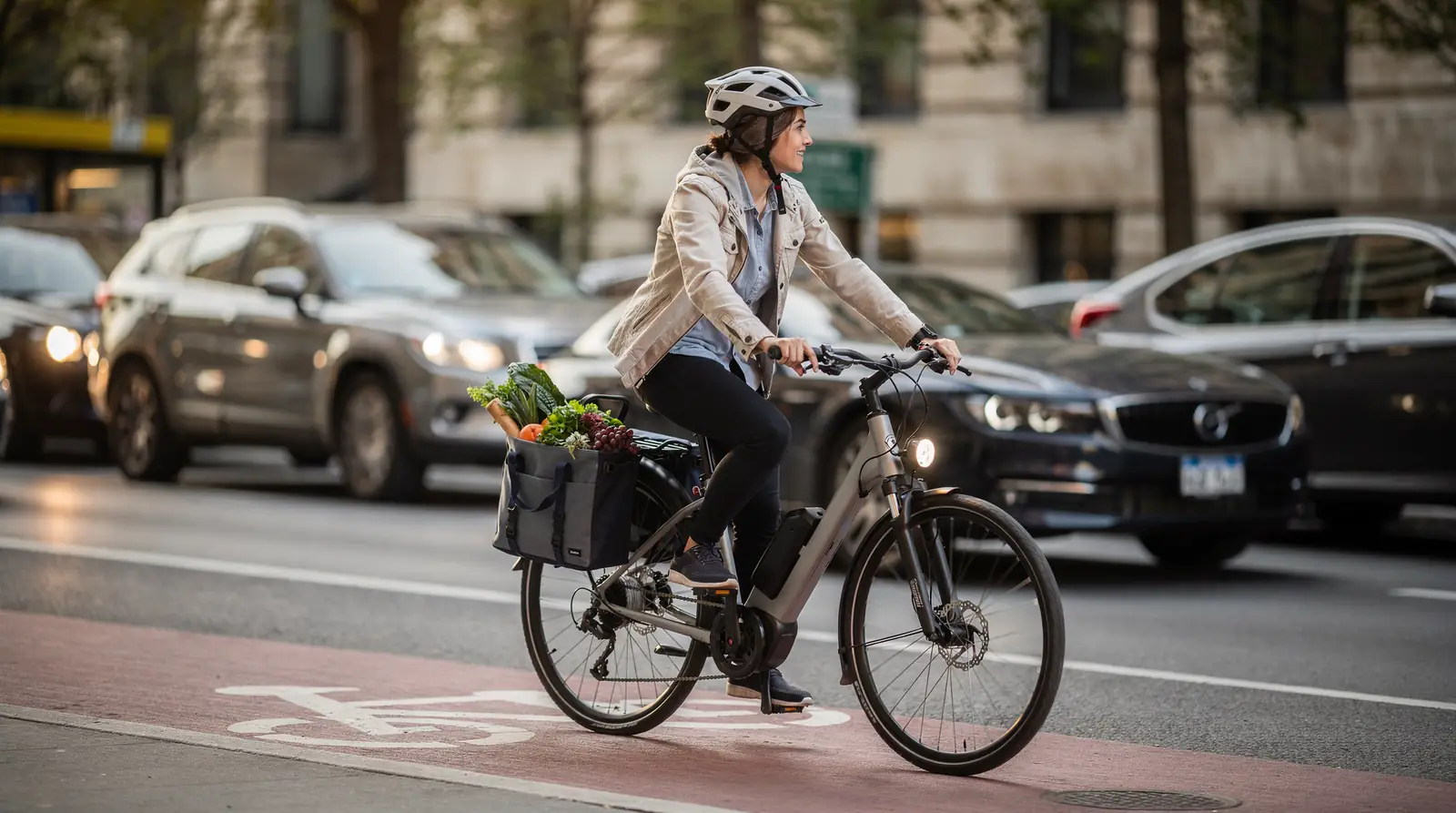
The easiest trips to shift are usually short errands and predictable commutes. Grocery runs, coffee stops, school drop-offs, appointments, and trips to nearby businesses can all be good candidates when the route is safe and the rider has enough battery range, cargo capacity, and secure parking.
Start With the Trips You Already Make
Before choosing an e-bike, look at a normal week and identify which car trips are short enough to replace realistically. A five-mile commute with bike-lane access is a very different use case from a 20-mile route on high-speed roads.
Distance is only part of the decision. Consider hills, traffic, weather exposure, storage at the destination, and how much you usually carry. An e-bike that fits those practical needs is more likely to become part of a sustainable lifestyle than one chosen mainly for speed or appearance.
Riders who need to combine cycling with a car, train, or limited storage may also benefit from folding e-bikes, which are designed to take up less space when stored or transported.
Match the Bike to What You Carry
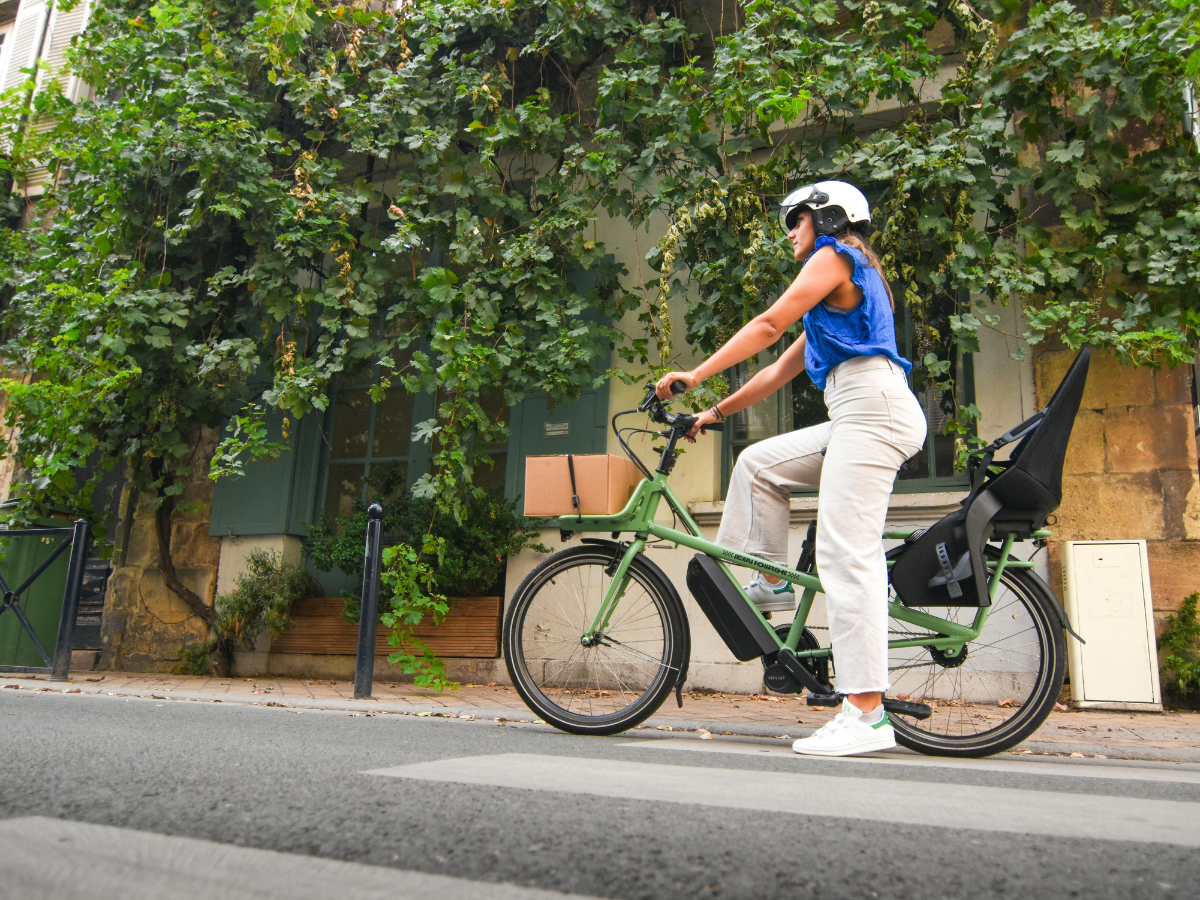
Cargo is one of the biggest reasons short car trips remain difficult to replace. A standard bicycle may work for commuting with a backpack but become inconvenient when the trip involves groceries, work equipment, or a child.
That does not automatically mean an e-bike cannot handle the job. Rear racks, panniers, baskets, trailers, and cargo-oriented frames can substantially expand what a rider can transport.
The right setup depends on weight limits and the bike manufacturer’s specifications, so carrying capacity should be checked before buying accessories or loading the bike.
For someone hoping to reduce car use, this practical detail often matters more than maximum motor power. A bike that can carry what the rider actually needs is far more useful than one with impressive specifications but little everyday utility.
Make Sure the Range Fits the Entire Day
Advertised range figures should be treated as estimates. Battery use changes with hills, rider weight, cargo, speed, tire pressure, weather, and the level of electric assistance selected.
A practical commuter should have enough range for the full round trip with some reserve rather than planning around the maximum advertised number. Riders who can charge at work may have more flexibility, but relying on destination charging is less convenient if access to an outlet is uncertain.
Battery planning becomes especially important when several errands are combined into one trip. An e-bike may need to cover the commute, a grocery stop, and another destination before returning home, so the relevant distance is the whole day’s travel rather than the first leg alone.
Think About Parking and Security Before You Ride
A trip is only convenient if there is somewhere reasonable to leave the bike. Before replacing a regular car journey, check whether the destination has a secure rack or another appropriate locking point.
A quality lock is essential, and higher-value e-bikes may justify additional security measures. Lights, a helmet, reflective gear, mirrors, and weather protection can also make regular riding easier depending on the route and time of day.
These details may seem minor compared with choosing the bike itself, but they often determine whether green commuting becomes a repeatable habit or something the rider tries only occasionally.
Factor in Maintenance and Repairs
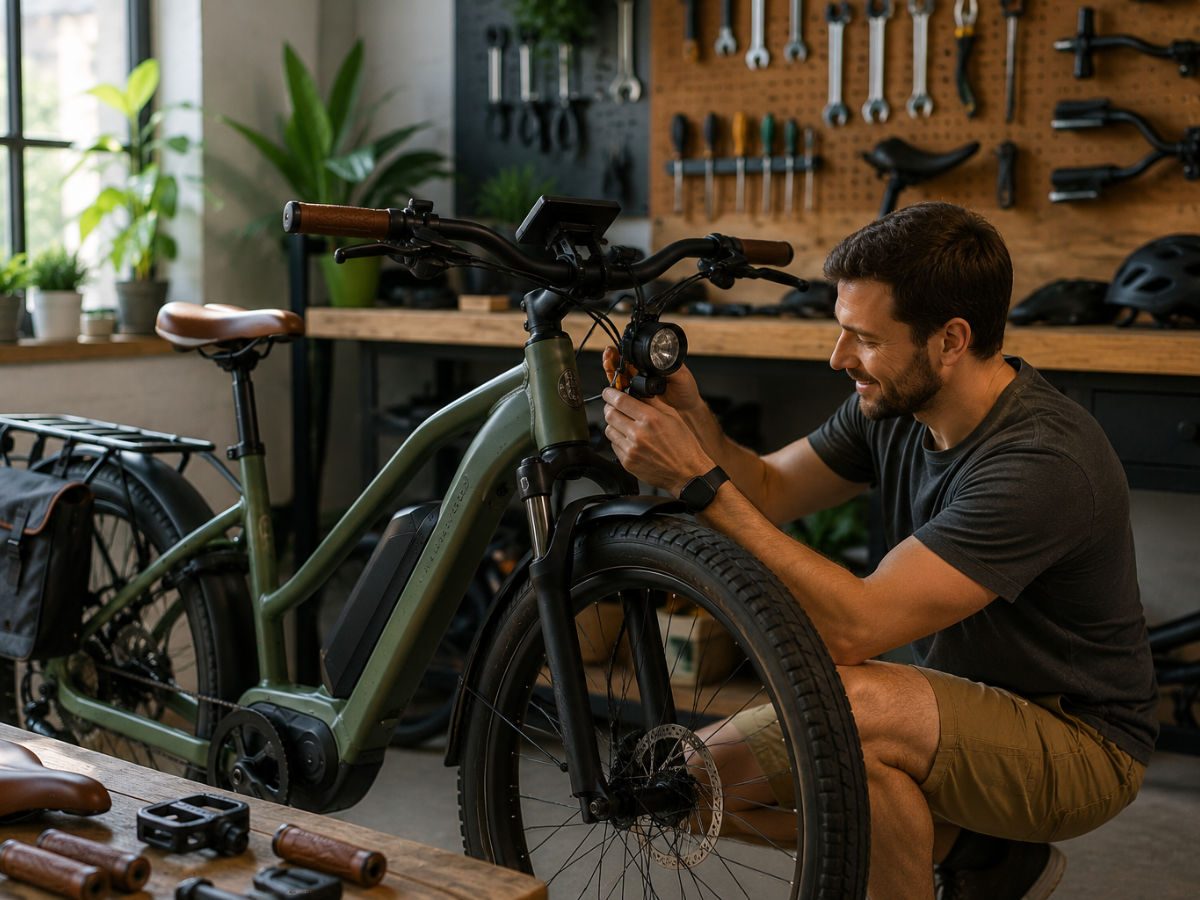
A car replacement needs to be dependable. Tires, brakes, drivetrain components, electrical connections, and the battery all require basic care, and heavier commuting use can increase wear.
Access to e-bike maintenance and repair is therefore worth considering before purchase, particularly because some electrical components are brand-specific. ElectroBike Georgia states that its service department repairs and maintains the brands it sells.
Regular servicing will not make an e-bike maintenance-free, but it can help keep a transportation bike reliable enough for daily use.
What Usually Prevents People From Replacing More Car Trips?
The biggest barriers are often practical rather than motivational. An unsafe route, lack of storage, insufficient cargo capacity, unpredictable weather, limited battery range, or nowhere to lock the bike can make an otherwise short trip difficult to replace.
Cost matters too, but buying the least expensive option is not necessarily the best solution. A cheaper bike that cannot handle the rider’s route or carrying needs may end up sitting unused.
Riders considering a purchase can benefit from testing different bike styles because fit, riding position, weight, handling, and motor response can feel very different in person. ElectroBike Georgia’s current service information notes that test rides are available for shoppers comparing models.
The most realistic sustainable lifestyle is usually built around substitutions that are easy to repeat. An e-bike does not need to replace every drive to be worthwhile. If it consistently handles the commute, grocery run, or neighborhood errands that used to require a car, it has already changed how that household gets around.
What Makes E-Bikes a Long-Term Eco-Friendly Choice?
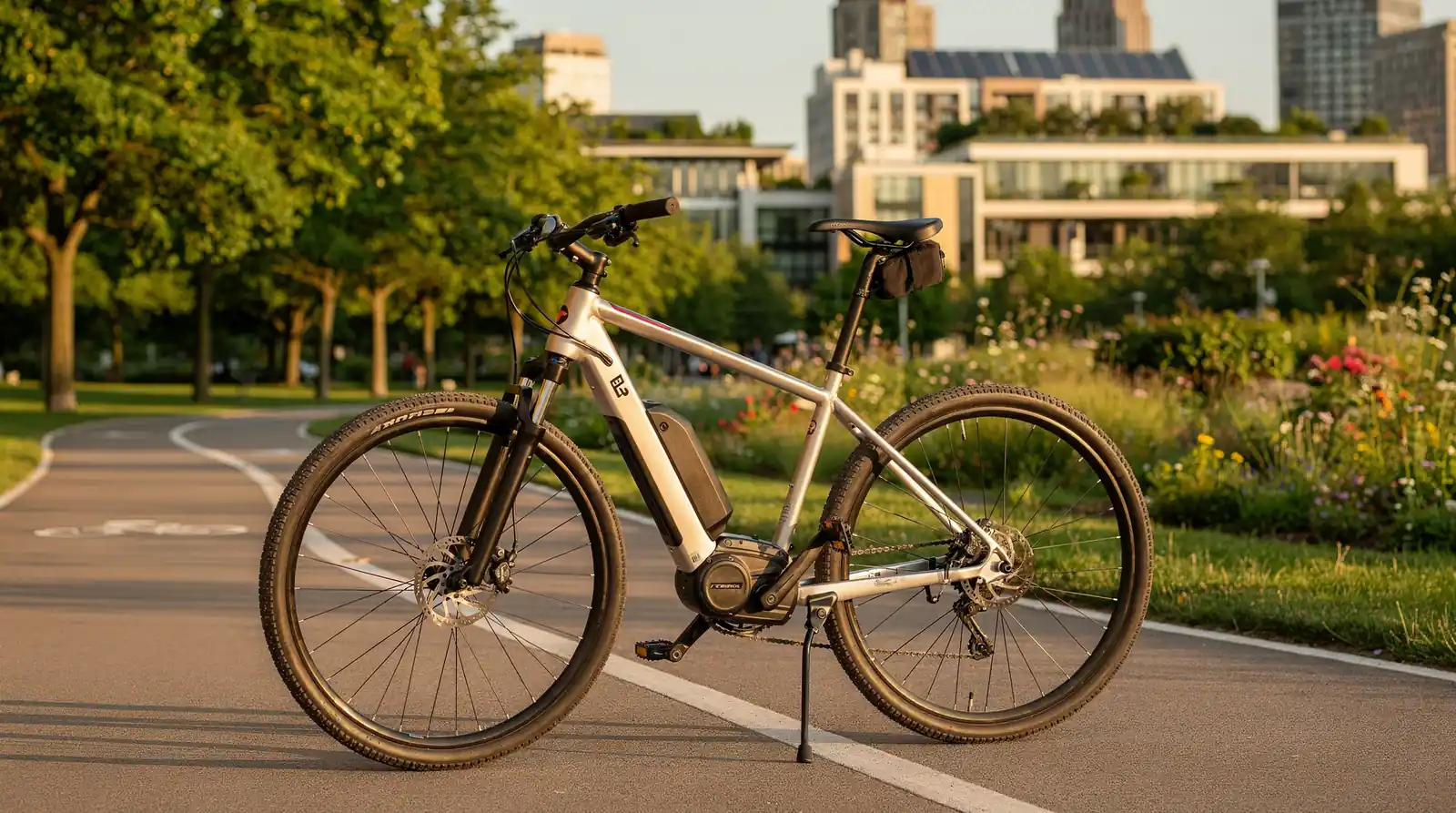
An e-bike becomes a meaningful part of a sustainable lifestyle when it stays useful long enough to replace car trips year after year. That makes durability, repairability, battery care, and choosing the right bike more important than simply buying an electric model and assuming the environmental benefits will follow.
The longer a rider continues using the same bike, the more value they can get from the materials and energy that went into manufacturing it. Regular maintenance can also prevent small mechanical issues from turning into reasons to stop riding altogether.
Choose an E-Bike You Will Actually Keep Using
A bike that does not suit the rider’s commute, terrain, body position, or carrying needs is more likely to spend time in storage. Before buying, think about where the bike will be ridden most often and what those trips require.
A commuter covering several miles each way may prioritize dependable range and an upright riding position. Someone carrying groceries may need rack or cargo capacity, while a rider with limited storage might value a lighter or folding design.
Comparing e-bike styles for different riding needs can help narrow the options before focusing on individual features.
Fit matters as well. Frame geometry, handlebar position, saddle height, bike weight, and mounting height all influence whether riding feels comfortable enough to become routine. The most environmentally impressive specifications mean little if the bike is unpleasant or impractical to use.
Take Care of the Battery Instead of Treating It as Disposable
The battery is one of the most important components to protect over the life of an e-bike. Lithium-ion batteries gradually lose capacity as they age, but charging habits, temperature, storage, and usage patterns can affect how quickly that happens.
Owners should follow the manufacturer’s charging and storage instructions rather than relying on universal battery advice. Batteries generally benefit from being protected from extreme temperatures, physical damage, and prolonged storage in unsuitable conditions.
If the bike will not be used for an extended period, check the manufacturer’s recommendations for storage charge level and how often the battery should be checked. Using the correct charger is equally important, since chargers are not automatically interchangeable simply because the connector fits.
Good battery care supports a sustainable lifestyle in a very practical way. Extending the useful life of an existing component is generally preferable to replacing it prematurely.
Maintain the Parts That Wear Out
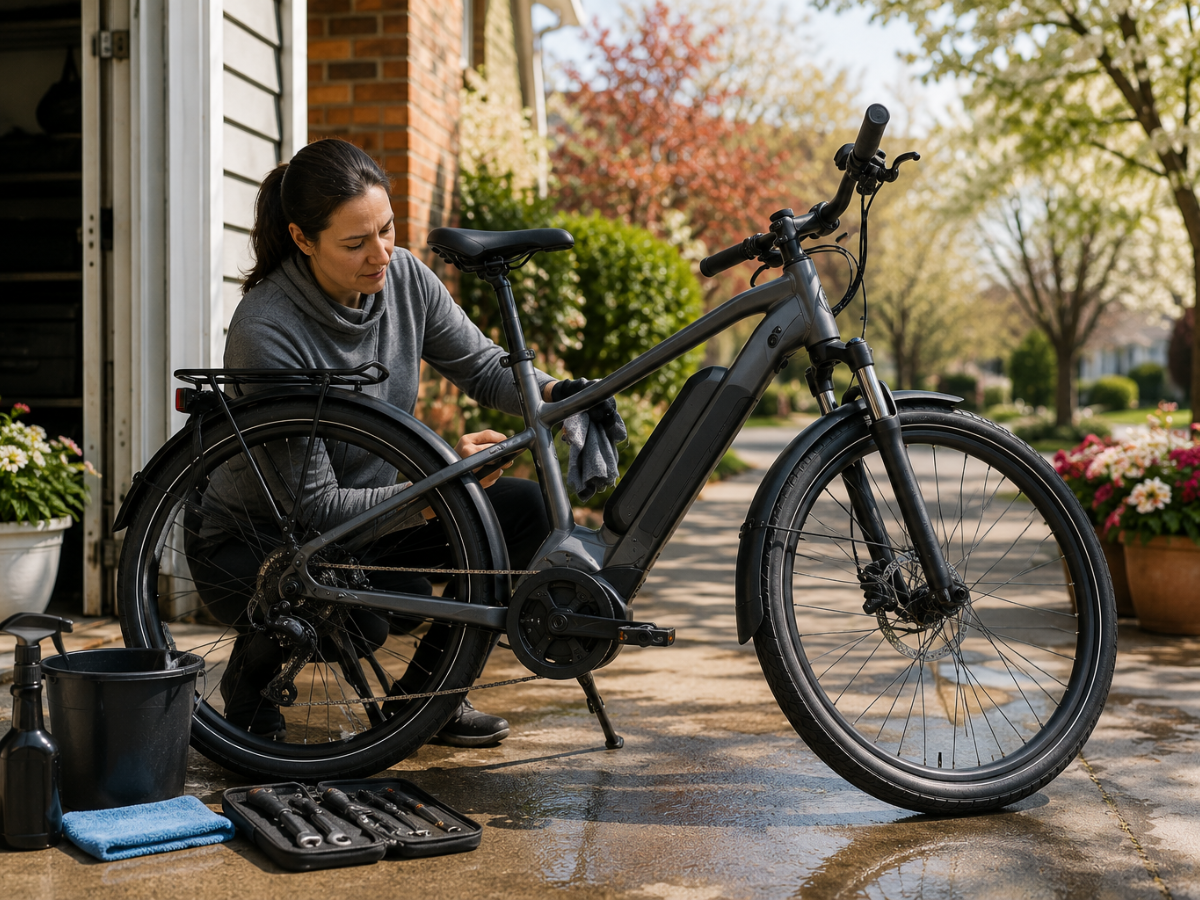
E-bikes still rely on many familiar bicycle components. Tires lose pressure, brake pads wear, chains need attention, bolts can loosen, and drivetrains collect dirt. Electric assistance can also mean riders travel farther or carry more weight, which may increase wear on some components.
Basic maintenance should include checking tire pressure and condition, inspecting the brakes, keeping the drivetrain clean and lubricated where appropriate, and watching for unusual noises or changes in handling.
Manufacturer-specific service intervals should take priority when electrical systems, motors, or batteries need inspection.
Not every problem requires replacing the bike. Many mechanical components can be serviced or replaced individually, which can keep an otherwise functional e-bike on the road much longer.
Consider Repair Support Before You Buy
Repairability deserves attention during the shopping process. E-bike motors, batteries, controllers, displays, and wiring can be more brand-specific than the components on a conventional bicycle.
Before purchasing, find out whether replacement parts are reasonably available and who can service the model locally. A bargain bike becomes less economical if a failed electrical component cannot be diagnosed or replaced a few years later.
Warranty terms are worth reviewing for the same reason. Coverage varies by manufacturer and component, so shoppers should check what is covered, how long coverage lasts, and what maintenance or documentation may be required to preserve it.
Know When an Upgrade Is Actually Necessary
A sustainable approach to ownership does not require replacing a bike whenever newer technology appears. Improvements in battery capacity, displays, motors, and other components can make new models appealing, but an older e-bike that still safely handles the rider’s needs may have plenty of useful life left.
Minor changes can sometimes solve the problem instead. A different saddle, better lights, new tires, added cargo storage, or routine servicing may make an existing bike significantly more practical without replacing the entire machine.
There are legitimate reasons to upgrade, particularly when the bike no longer fits the rider, needed replacement components are unavailable, or repair costs become unreasonable relative to its condition. The goal is simply to distinguish a genuine transportation need from the appeal of having the newest model.
How Does Long-Term Ownership Support a Sustainable Lifestyle?
The environmental value of an e-bike depends heavily on use. A durable bike that is ridden regularly and replaces car mileage offers a stronger case for sustainable transportation than one that is purchased with good intentions and rarely leaves the garage.
That shifts the focus from buying an eco-friendly product to building a repeatable habit. Choose a bike suited to real trips, care for the battery, replace worn components when needed, and keep the bike comfortable and dependable enough to use.
A sustainable lifestyle is rarely built around one perfect purchase. In transportation, it is more often the result of owning equipment that works well enough, for long enough, to make the lower-impact choice easy to repeat.
Frequently Asked Questions About E-Bikes and Sustainable Transportation

Do E-Bikes Really Lower Your Carbon Footprint Compared With Cars?
Generally, yes, especially when an e-bike replaces trips that would otherwise be made in a gasoline-powered car. E-bikes use electricity rather than burning fuel during the ride, so they produce no tailpipe emissions. They also require far less energy to move one person than a conventional passenger vehicle.
That does not mean e-bikes have no environmental footprint. Manufacturing the frame, motor, electronics, and lithium-ion battery requires materials and energy, while charging emissions depend partly on the local electricity supply.
The environmental advantage comes from the much lower energy requirements of the bike and, most importantly, from repeatedly replacing higher-emission vehicle trips.
Can an E-Bike Replace a Car for Everyday Trips?
For many short and moderate-distance trips, it can. Work commutes, grocery runs, appointments, school trips, and visits to nearby businesses are often the most realistic journeys to replace. Electric assistance makes hills, longer distances, and carrying modest loads easier than they would be on a conventional bicycle.
An e-bike does not have to replace every car journey to contribute to a sustainable lifestyle. Driving may still make more sense for long-distance travel, severe weather, multiple passengers, or unusually large loads.
The practical goal is to identify routine trips where cycling works well and use the car only when it genuinely offers an advantage.
How Far Can You Commute on an E-Bike?
Range varies considerably by bike and riding conditions. Battery capacity provides a useful starting point, but terrain, rider and cargo weight, tire pressure, temperature, speed, and the amount of pedal assistance used can all change how far the bike travels on a charge.
For commuting, advertised maximum range should not be the only number considered. The bike should comfortably cover the entire round trip, including any additional errands, with some battery capacity left in reserve.
A dependable 15-mile daily commute matters more than owning a bike capable of an impressive maximum range that the rider rarely needs.
Is an E-Bike Still Sustainable if You Charge It With Grid Electricity?
Yes. Charging from the electrical grid still uses energy, and the associated emissions depend on how that electricity is generated. However, the battery on an e-bike is much smaller than an electric-car battery, and the energy required for each mile of travel is correspondingly low.
Battery care also affects the long-term environmental picture. Following the manufacturer’s instructions for charging and storage, protecting the battery from damaging temperatures, and replacing it only when necessary can help extend its useful life.
What Should You Consider Before Using an E-Bike Instead of a Car?
Start with the trip rather than the bike. Consider distance, hills, traffic, access to bike-friendly routes, weather, secure parking, cargo needs, and where the bike will be stored at home.
Then look for a model that suits those conditions. A commuter may prioritize comfort and dependable range, while someone running errands might need racks, baskets, or cargo capacity.
Test riding can also reveal differences in frame fit, balance, braking, motor response, and handling that specifications alone cannot show. ElectroBike Georgia currently encourages shoppers to test ride different models at its Atlanta location before choosing a bike.
Is Buying an E-Bike Enough to Make Transportation More Sustainable?
Not by itself. The environmental benefit depends on how the bike is actually used. Buying an e-bike for occasional recreational rides while continuing to drive every routine journey will have a different impact from using it several times each week instead of a car.
A more sustainable lifestyle develops through repeatable transportation choices. Replacing the commute twice a week, biking to nearby stores, or combining cycling with public transit may be more realistic than trying to eliminate driving altogether. Those smaller substitutions are also easier to maintain over time.
What Makes an E-Bike a Good Long-Term Choice?
Look beyond motor power and maximum speed. A useful long-term bike should fit the rider comfortably, handle the terrain it will regularly encounter, provide adequate range, carry necessary belongings, and have replacement parts and service support available.
Maintenance matters too. Tires, brakes, chains, drivetrains, batteries, and electrical components all need attention over time. Keeping a well-suited bike in reliable condition makes it easier to continue using it instead of falling back on the car whenever a small problem appears.
For someone building a sustainable lifestyle around everyday transportation, consistency is more important than perfection. An e-bike that reliably replaces ordinary car journeys several times a week can be far more useful than a theoretically greener transportation option that does not fit daily life.
Conclusion
Green commuting does not have to mean completely changing the way you travel overnight. Choosing lower-impact transportation for even some everyday trips can help reduce reliance on cars while supporting a more active and sustainable lifestyle.
E-bikes offer a practical option for commuting, running errands, and making shorter journeys without giving up convenience or flexibility.
For quality e-bikes, accessories, and guidance on finding the right ride for your needs, choose ElectroBike Georgia. If you’re ready to make e-biking part of your everyday routine, call (404) 400-7132 to speak with the team at ElectroBike Georgia, or shop with us today.