Your e-bike may get most of the attention, but the components and accessories attached to it face the same miles, moisture, dirt, heat, and changing riding conditions. Batteries, brakes, tires, lights, racks, displays, and electrical connections can all benefit from maintenance that changes with the season.
Following the right seasonal maintenance tips can help riders spot wear, protect sensitive components, and keep essential accessories working when they are needed most. A spring inspection may focus on post-storage checks, while summer heat, wet fall rides, and winter storage introduce different priorities.
Building these tasks into your routine can also prevent small problems from becoming inconvenient failures. With a little seasonal attention, your e-bike and the gear that supports it can stay safer, more reliable, and ready for the road throughout the year.
Seasonal Maintenance Tips to Keep Your E-Bike Riding Smoothly
What Do You Need Before You Start Seasonal E-Bike Maintenance?
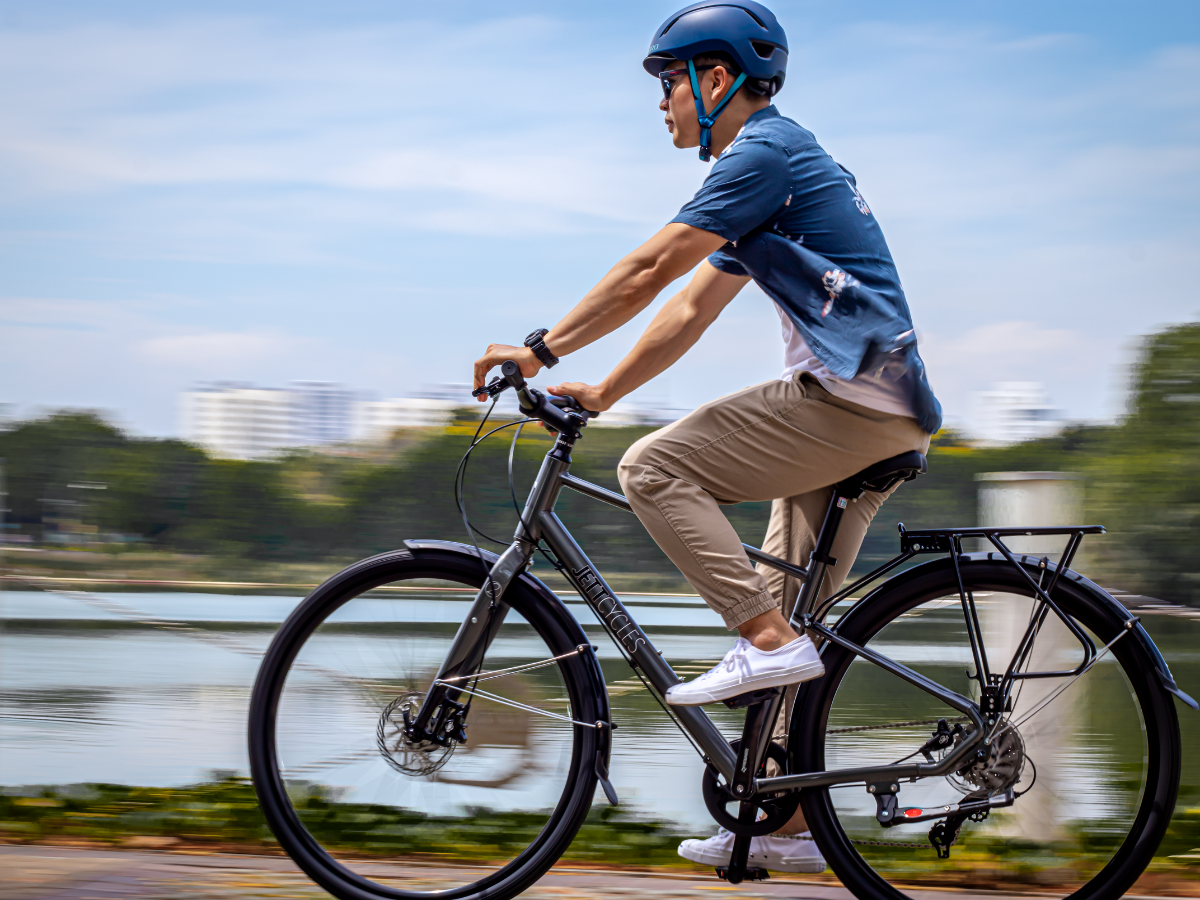
Seasonal maintenance is easier with a few basic tools, a clean workspace, and the correct information for your e-bike. The goal is not to perform a full overhaul every few months but to inspect components affected by recent riding, storage, temperature changes, and mileage.
Check the owner’s manual for tire pressure, battery care, lubrication, torque specifications, and service intervals. E-bikes vary by brand and drive system, so general seasonal maintenance tips should support manufacturer instructions rather than replace them.
What Tools Should Be in a Basic E-Bike Maintenance Kit?
A practical kit may include:
- A floor pump with an accurate pressure gauge
- A compatible multitool or hex-key set
- Manufacturer-approved chain lubricant
- Clean, soft cloths
- A soft drivetrain brush
- Basic tire-repair supplies
- The correct battery charger
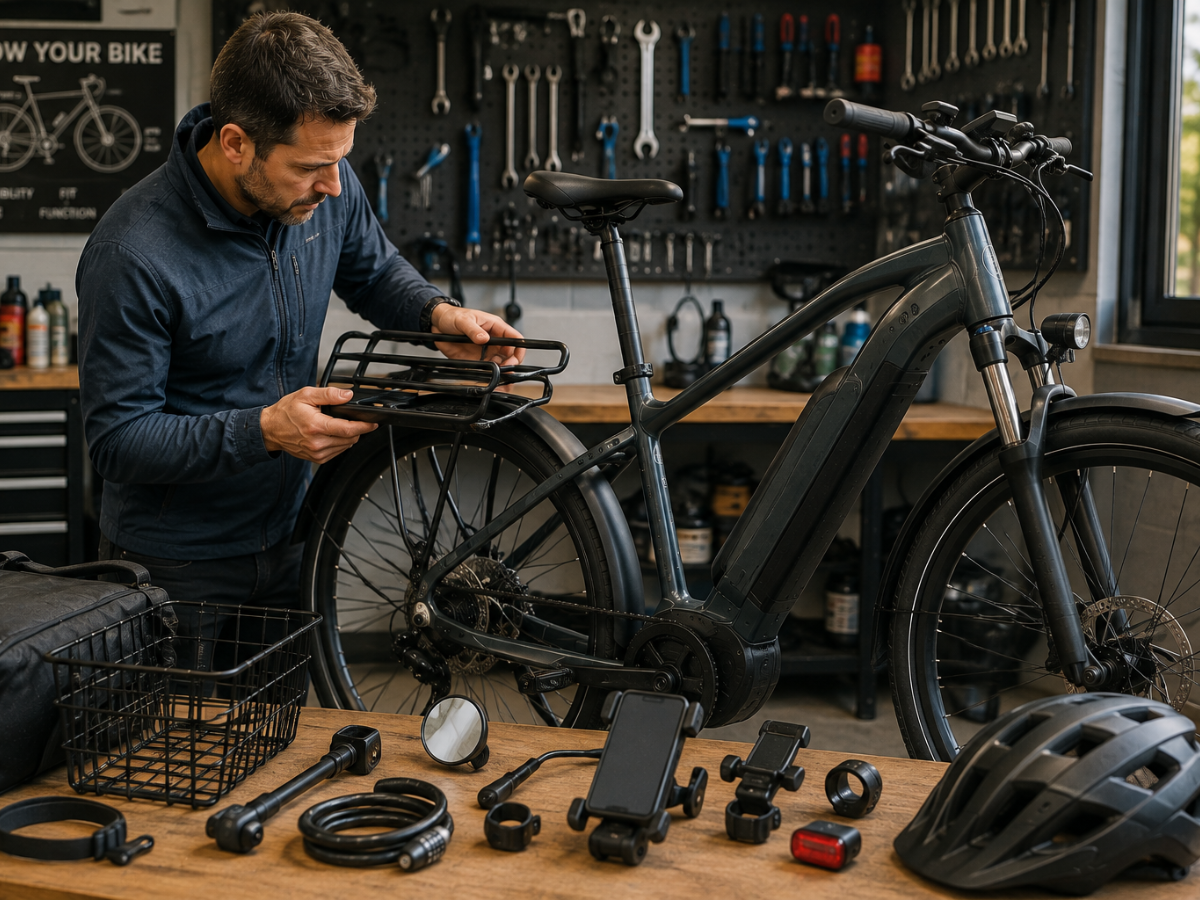
A torque wrench can also be useful when you know the correct specification. Riders with racks, bags, mirrors, phone mounts, or other accessories should include those mounting points in regular inspections.
ElectroBike Georgia carries a range of e-bike accessories and riding gear, making accessory condition part of the broader maintenance picture rather than something separate from the bike itself.
What Should You Check Before Doing Any Adjustments?
Start with inspection. Look over the tires, brakes, drivetrain, battery mount, electrical connections, lights, display, wheels, and accessories before reaching for tools.
Check for visible damage, unusual brake feel, excessive drivetrain buildup, loose accessories, damaged battery components, or recurring error messages. If the bike has been stored, confirm that the battery mounts securely and operates normally.
Avoid adjusting components simply because the calendar changed. Seasonal maintenance should identify what actually needs attention.
Why Should You Clean the Bike Before Inspecting It?
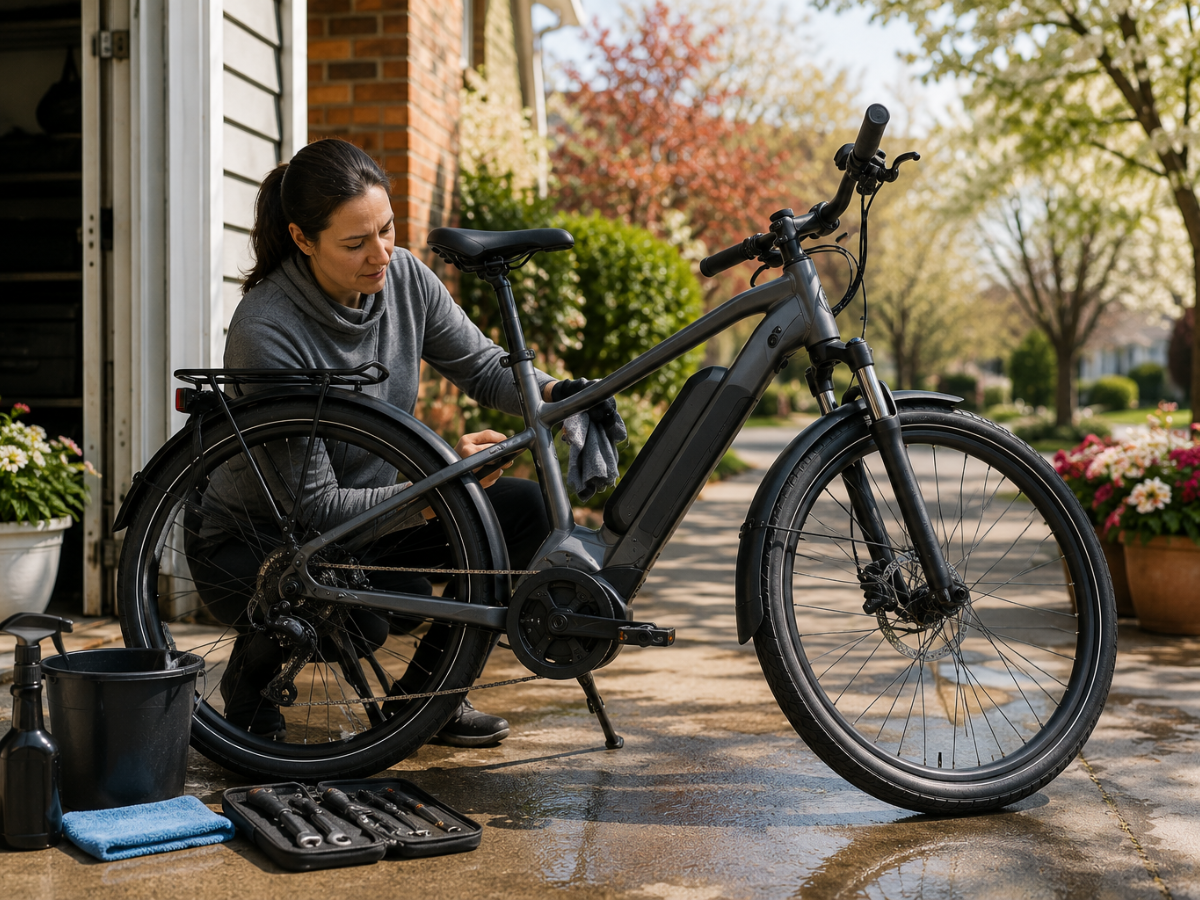
Dirt can hide wear, corrosion, and damage. Clean the bike using methods appropriate for its components, and avoid directing high-pressure water at the motor, battery connections, display, bearings, or other sensitive areas.
Once the bike is clean and dry, individual components are easier to inspect. Wet or muddy riding may also require more frequent drivetrain cleaning and lubrication.
Why Does Timing Matter for Seasonal Maintenance?
Heat, cold, rain, storage, and mileage affect components differently. Hot storage conditions can be hard on batteries, cold can temporarily reduce range, wet roads expose the drivetrain to more grime, and temperature changes can affect tire pressure.
Seasonal transitions are useful inspection reminders, not rigid service deadlines. A high-mileage commuter may need maintenance much more frequently than an occasional recreational rider.
What Maintenance Is Reasonable to Do at Home?
Many riders can handle tire-pressure checks, basic cleaning, chain care, light testing, accessory inspections, and checks for visible damage.
Brake problems, electrical faults, recurring system errors, unusual motor behavior, damaged batteries, and structural damage are better candidates for professional evaluation.
ElectroBike Georgia’s e-bike service and repair options cover maintenance and repairs for the brands the shop sells, which is an important limitation to confirm before bringing in a bike.
What Should Make You Stop and Get Professional Help?
Do not continue routine maintenance if you find a swollen or physically damaged battery, exposed wiring, recurring electronic errors, severely reduced braking performance, unusual motor behavior, or structural damage to the frame or fork.
Those problems go beyond a basic seasonal checklist and may require manufacturer-specific inspection or diagnostic equipment.
The same applies when a simple adjustment does not resolve a problem. Repeatedly tightening, realigning, or resetting a component without understanding why it keeps changing can make diagnosis harder later.
A useful seasonal maintenance routine should therefore begin with preparation, not repair. Gather the right tools, consult the manufacturer’s guidance, inspect the bike carefully, and decide which tasks are appropriate to handle yourself before making adjustments.
How Do You Complete a Seasonal E-Bike Maintenance Checklist?

A seasonal check should move from basic inspection to a short test ride. Start with components that affect safety and reliability, and use manufacturer specifications whenever requirements vary by model.
1. Inspect the Battery and Electrical System
Check that the battery mounts securely and inspect its case and visible connections for damage. Confirm that the display, controls, lights, and pedal-assist system power on normally.
Watch for repeated charging problems, unexpected shutdowns, recurring errors, unusual heat, or significant changes in normal battery behavior. Cold weather can temporarily reduce range, so a shorter winter ride does not automatically indicate permanent battery deterioration.
2. Check the Tires Before Adjusting Anything Else
Measure pressure against the recommended range rather than squeezing the tire by hand. Inspect the tread and sidewalls for embedded debris, cuts, cracking, unusual wear, bulges, or other damage. If pressure repeatedly drops soon after inflation, investigate the cause instead of continually topping it up.
3. Inspect the Brakes and Drivetrain
Test both brakes before riding and note worn pads, unusual noises, reduced braking response, or anything that feels inconsistent. The drivetrain should move smoothly without excessive noise, corrosion, or buildup. Clean a dirty chain before applying appropriate lubricant rather than adding lubricant over grit.
Brake condition is especially important after storage or a period of heavy riding. Broader e-bike safety checks and riding practices also reinforce the importance of maintaining tires, brakes, and the battery rather than treating maintenance as purely a performance issue.
4. Check Fasteners, Wheels, and Accessories
Inspect racks, baskets, fenders, mirrors, lights, and other mounted accessories for movement or damaged hardware. Check wheels for obvious wobble, unusual play, or new noises. Do not tighten every fastener automatically. Follow manufacturer torque specifications where applicable.
5. Take a Short, Controlled Test Ride
Test the brakes, shifting, pedal-assist levels, steering, and motor engagement close to home. Pay attention to new noises, vibration, inconsistent assistance, or anything that feels different from normal. If braking, steering, or electrical assistance behaves unpredictably, stop riding and have the problem evaluated.
What Is the First Sign of Trouble to Watch For?
There is no single warning sign that appears first on every e-bike. Changes from the bike’s normal behavior are often more useful than looking for one specific symptom.
Reduced braking performance, repeated tire-pressure loss, rough shifting, new drivetrain noises, recurring electrical errors, unexpected motor cutouts, or a noticeable change in battery behavior all deserve attention.
Seasonal maintenance gives you a regular opportunity to notice those changes before they become easier to ignore.
How Often Should You Repeat the Checklist?
Use seasonal changes as checkpoints, but combine them with regular maintenance based on mileage, weather exposure, riding conditions, and manufacturer recommendations. High-mileage commuters and riders frequently encountering rain, dirt, hills, or heavy loads may need certain checks much more often.
When Should You Call a Professional for E-Bike Service?
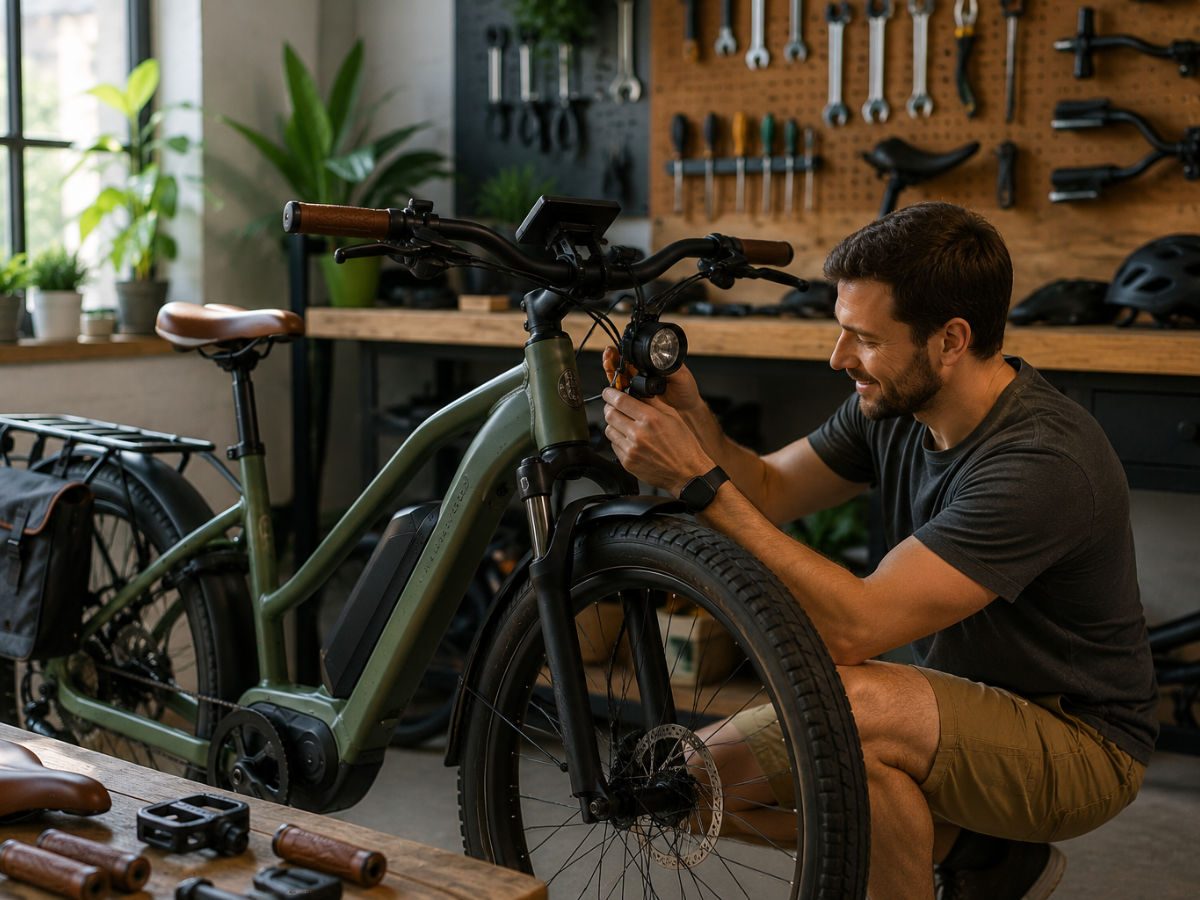
Basic cleaning, tire checks, chain care, and visual inspections are reasonable for many owners. Problems involving braking, batteries, motors, wiring, persistent mechanical faults, or structural components may require specialized knowledge.
Stop troubleshooting when a problem affects safety, involves the electrical system, or persists after a straightforward owner-level check.
Which Problems Should a Technician Inspect?
Professional attention is appropriate for issues such as:
- Brakes that no longer stop the bike predictably
- Pedal assist that cuts in and out
- Recurring motor or display errors
- A swollen, cracked, leaking, unusually hot, or damaged battery
- Damaged wiring or electrical connectors
- Significant wheel play or wobble
- Persistent shifting problems
- Unusual motor noises or vibration
- Repeated charging failures
- Frame or fork damage
These problems go beyond routine seasonal maintenance and may require model-specific diagnosis.
When Is a Battery Problem More Than Normal Range Loss?
Range varies with temperature, terrain, tire pressure, cargo, assist level, riding style, and battery age. Reduced range alone therefore does not prove that a battery is failing.
Physical damage and abnormal electrical behavior are more concerning. Stop using or charging a battery that is swollen, cracked, leaking, unusually hot, or seriously damaged.
Repeated charging failures, shutdowns, or system errors may also require professional diagnosis. Lithium-ion battery packs are not appropriate for casual DIY disassembly.
When Should Brake Problems Go to a Shop?
Brake noise alone does not always indicate a major problem. Reduced stopping power is more important. If braking becomes inconsistent, the lever behaves abnormally, hydraulic fluid appears to be leaking, or the bike no longer stops predictably, have the system inspected before continuing to ride.
What About Motor and Pedal-Assist Problems?
Start by confirming that the battery is seated correctly, the display powers on, and any rider-accessible connections appear normal.
If pedal assist remains inconsistent, the motor repeatedly cuts out, error codes return, or the bike behaves unpredictably under power, professional diagnosis is the better next step.
How Long Does Professional E-Bike Repair Take?
Repair time depends on what is wrong with the bike. A straightforward mechanical adjustment may be relatively quick, while motor, battery, electrical, or proprietary component problems can take longer if diagnosis or replacement parts are required.
Parts availability matters as much as technician workload. Before leaving the bike with a shop, ask whether the needed components are available, whether diagnostic work is required, and whether the shop services your particular brand and drive system.
ElectroBike Georgia currently states that it services the e-bike brands it sells, including work involving batteries, motors, brakes, and general maintenance. That brand limitation is worth confirming before transporting a bike for service.
What Should You Tell the Technician?
Describe when the problem started, whether it is constant or intermittent, what conditions trigger it, and whether an error code appears.
Mention recent maintenance, crashes, water exposure, component changes, or other events that occurred shortly before the problem began. Also confirm that the shop services your particular e-bike brand and drive system.
Should You Wait Until Something Breaks?
No. Professional service does not have to begin with a complete failure, especially when a rider notices a recurring change in braking, shifting, motor assistance, battery behavior, or wheel condition.
Seasonal maintenance works best as an early-warning system. It gives you regular opportunities to distinguish ordinary upkeep from a developing problem that deserves professional attention before it becomes more disruptive, expensive, or unsafe.
How Should E-Bike Maintenance Change With the Seasons?
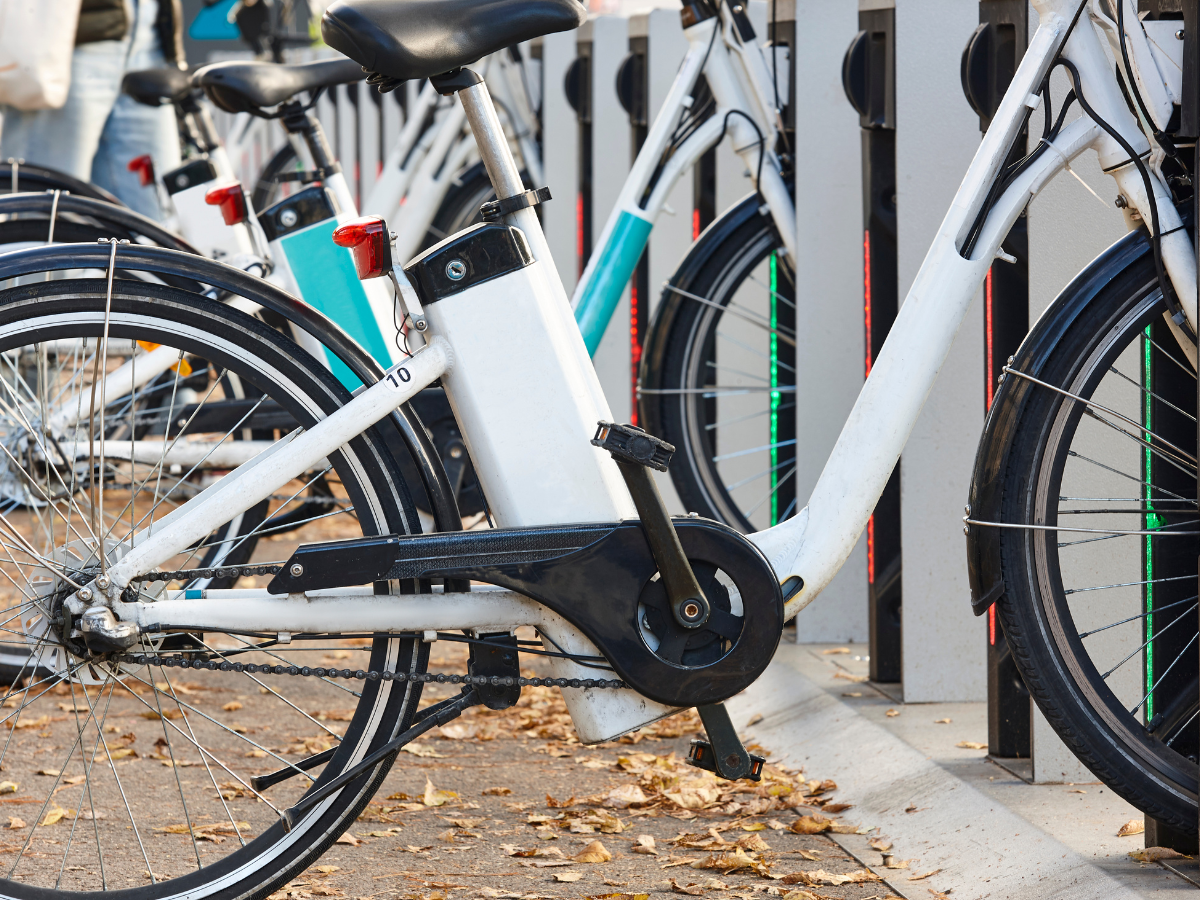
Seasonal maintenance should respond to the conditions the bike has experienced rather than repeat an identical checklist every few months.
What Should You Check in Spring?
After reduced winter use or storage, inspect tire pressure, brakes, drivetrain condition, battery mounting, lights, controls, and accessories before returning to longer rides. Look for pressure loss, corrosion, drivetrain buildup, or battery behavior that differs significantly from normal. Clean and lubricate the drivetrain if needed.
What Changes During Summer Maintenance?
Hot weather shifts attention toward battery storage, tires, and increased mileage. Avoid storing or charging the battery in excessively hot locations when manufacturer guidance recommends a cooler environment. Increased riding may also mean more frequent brake, tire, and drivetrain checks.
What Deserves Extra Attention in Fall?
Wet leaves, rain, dirt, and shorter daylight hours make traction, braking, lights, and drivetrain cleanliness more important. Clear buildup from moving components and prepare the bike for storage if riding will decrease substantially.
How Should Winter Change Your Routine?
Cold weather can temporarily reduce lithium-ion battery range. Follow manufacturer instructions for charging and storage temperatures rather than assuming reduced winter performance means the battery is failing. After wet or dirty rides, wipe down the bike and avoid storing it while still wet.
Does Rain Change the Maintenance Schedule?
Frequent wet-weather riding usually requires more drivetrain cleaning and closer attention to brakes and electrical behavior. Do not assume an e-bike is waterproof.
Avoid high-pressure cleaning around electrical components and bearings. If electrical errors or inconsistent motor assistance appear after heavy water exposure, professional inspection may be appropriate.
Should Every Rider Follow the Same Seasonal Schedule?
No. Mileage, terrain, weather, cargo, storage, and riding frequency all affect maintenance needs. Use seasonal changes as reminders to reassess the bike, then adjust maintenance frequency to its actual use and manufacturer recommendations.
How Should You Store an E-Bike Between Riding Seasons?
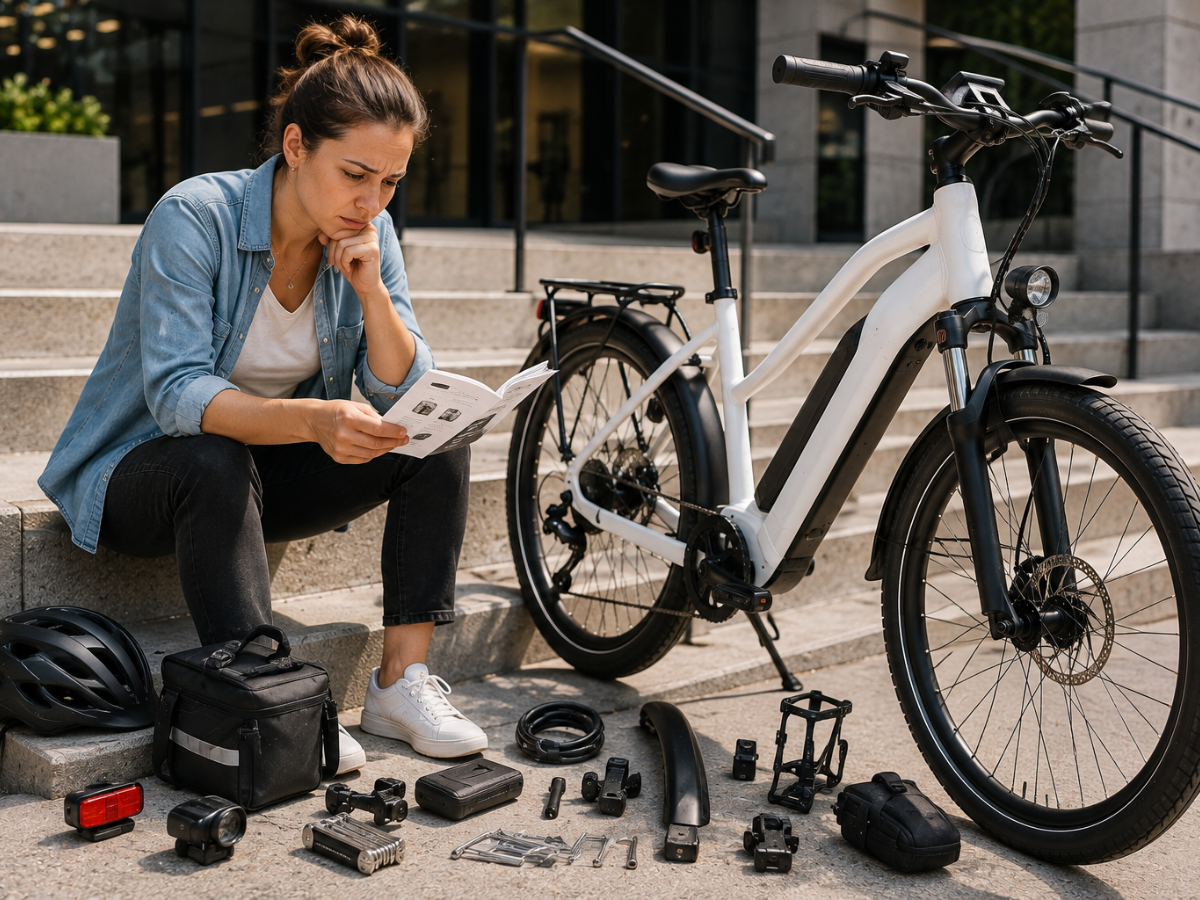
Long-term storage deserves some preparation because tires lose pressure, batteries continue to age, moisture can contribute to corrosion, and dirt can remain on components for months.
Manufacturer instructions should guide battery charge level, temperature limits, and whether the battery should be removed.
Should You Clean the E-Bike Before Storing It?
Yes. Remove road grime, mud, and drivetrain buildup, then allow the bike to dry completely. Clean and lubricate the chain if needed, and avoid high-pressure washing around electrical connections, bearings, and the motor.
Where Should an E-Bike Be Stored?
Choose a dry, secure location protected from weather and severe temperature extremes. Battery temperature requirements are especially important. If the removable battery needs more controlled conditions than the bicycle’s storage location provides, follow the manufacturer’s instructions for separate storage.
What Charge Level Should the Battery Have During Storage?
There is no universal percentage for every e-bike battery. Follow the manufacturer’s recommended storage charge and periodic charging schedule. Do not assume the battery should always be stored completely full, empty, or continuously connected to a charger.
Should You Remove the Battery From the Bike?
Possibly. Removal can make sense when the bicycle must be stored somewhere outside the battery’s recommended temperature or humidity range. Follow the manufacturer’s procedure and never store a battery that appears swollen, cracked, leaking, or otherwise physically damaged.
What Should You Do With the Tires During Long Storage?
Check tire pressure before storage and again before returning the bike to service. Tires naturally lose air over time even without a puncture. For longer storage periods, checking pressure occasionally can help prevent the bike from sitting for months on severely underinflated tires.
Should You Cover the E-Bike?
A breathable cover can help protect the bike from dust in a dry indoor storage area. Avoid trapping moisture underneath a non-breathable cover, particularly if the bike was recently washed or ridden in wet conditions.
The storage location itself matters more than simply covering the bike. Keeping it dry and away from corrosive materials, standing water, or severe temperature swings provides more meaningful protection than wrapping a poorly stored bike.
What Should You Check While the Bike Is Stored?
Occasionally inspect for tire-pressure loss, moisture, corrosion, pest damage, loose accessories, and changes in battery condition. Check battery charge according to manufacturer guidance and use the correct charger when a maintenance charge is needed.
What Should You Do Before Riding Again?
Inspect the tires, brakes, wheels, drivetrain, battery, controls, lights, and accessory mounts before taking the bike back onto the road. Charge the battery according to manufacturer instructions and finish with a short test ride to confirm normal braking, shifting, steering, pedal assist, and electrical operation.
Frequently Asked Questions About Seasonal E-Bike Maintenance
What Tools Do You Need for a Basic E-Bike Maintenance Checklist?
A practical home kit can include a floor pump with a pressure gauge, compatible hex keys or a bicycle multitool, clean cloths, a soft brush, chain lubricant, and basic tire-repair supplies. A torque wrench can also be useful when you know the manufacturer’s specified torque value for the component you are checking.
Why Does Timing Matter for Seasonal Maintenance?
Heat, cold, rain, storage, and changes in riding frequency can affect different parts of an e-bike, so maintenance priorities shift throughout the year. Seasonal maintenance works best as a reminder to inspect the bike based on recent conditions rather than following a rigid four-times-a-year schedule.
How Often Should You Check Tire Pressure?
Check tire pressure regularly and before longer rides, especially after storage or noticeable temperature changes. Use the recommended pressure range for your specific tires rather than judging pressure by feel, and investigate repeated pressure loss instead of continually topping the tire up.
Does an E-Bike Need Different Maintenance in Summer and Winter?
Yes, although many core checks remain the same. Summer may require more attention to battery heat and increased mileage, while colder or wetter conditions can affect battery range, drivetrain cleanliness, tire pressure, and storage needs.
How Should You Store an E-Bike Battery Between Seasons?
Follow the battery manufacturer’s instructions for storage temperature, charge level, and periodic charging because recommendations vary between systems. Keep the battery dry and protected from extreme temperatures, and do not assume that leaving it completely full, empty, or continuously connected to a charger is appropriate.
How Do You Know if an E-Bike Battery Needs Professional Attention?
Range changes alone do not necessarily indicate battery failure because temperature, terrain, tire pressure, cargo, and assist level also affect range. Swelling, cracking, leakage, unusual heat, repeated charging failures, unexpected shutdowns, or recurring electrical errors are stronger reasons to stop using the battery and seek professional guidance.
How Often Should an E-Bike Be Professionally Serviced?
There is no universal service interval for every e-bike. Follow manufacturer recommendations and consider mileage, riding conditions, component wear, and how frequently the bike is used, since a daily commuter may need service sooner than an occasional recreational rider.
What Should You Check After Long-Term Storage?
Inspect the tires, brakes, drivetrain, wheels, battery, lights, display, and pedal-assist system before returning to normal riding. After the stationary checks, take a short controlled ride to confirm that braking, shifting, steering, and motor assistance feel normal.
Should You Lubricate the Chain Every Season?
Not automatically. Chain lubrication should depend on mileage, weather exposure, drivetrain condition, and the lubricant manufacturer’s guidance, and a dirty chain should be cleaned before fresh lubricant is applied.
What Warning Signs Should You Never Ignore?
Reduced braking performance, damaged wiring, recurring electrical errors, unusual motor behavior, significant wheel play, and physical battery damage all deserve prompt attention. If a problem affects safety or continues after a basic owner-level check, professional diagnosis is usually more appropriate than repeated DIY adjustments.
Conclusion
Seasonal maintenance can help keep your e-bike accessories and components reliable as temperatures, riding conditions, and storage needs change throughout the year.
Regularly checking items such as tires, brakes, lights, batteries, racks, and other frequently used accessories can help you spot wear early and prepare your bike for the conditions ahead.
A consistent maintenance routine also gives you an opportunity to replace worn components or add accessories that better suit your changing riding needs.
For e-bikes, accessories, components, and knowledgeable support, choose ElectroBike Georgia. If you’re getting your e-bike ready for the next season, call (404) 400-7132 to speak with the team at ElectroBike Georgia and shop with us today.