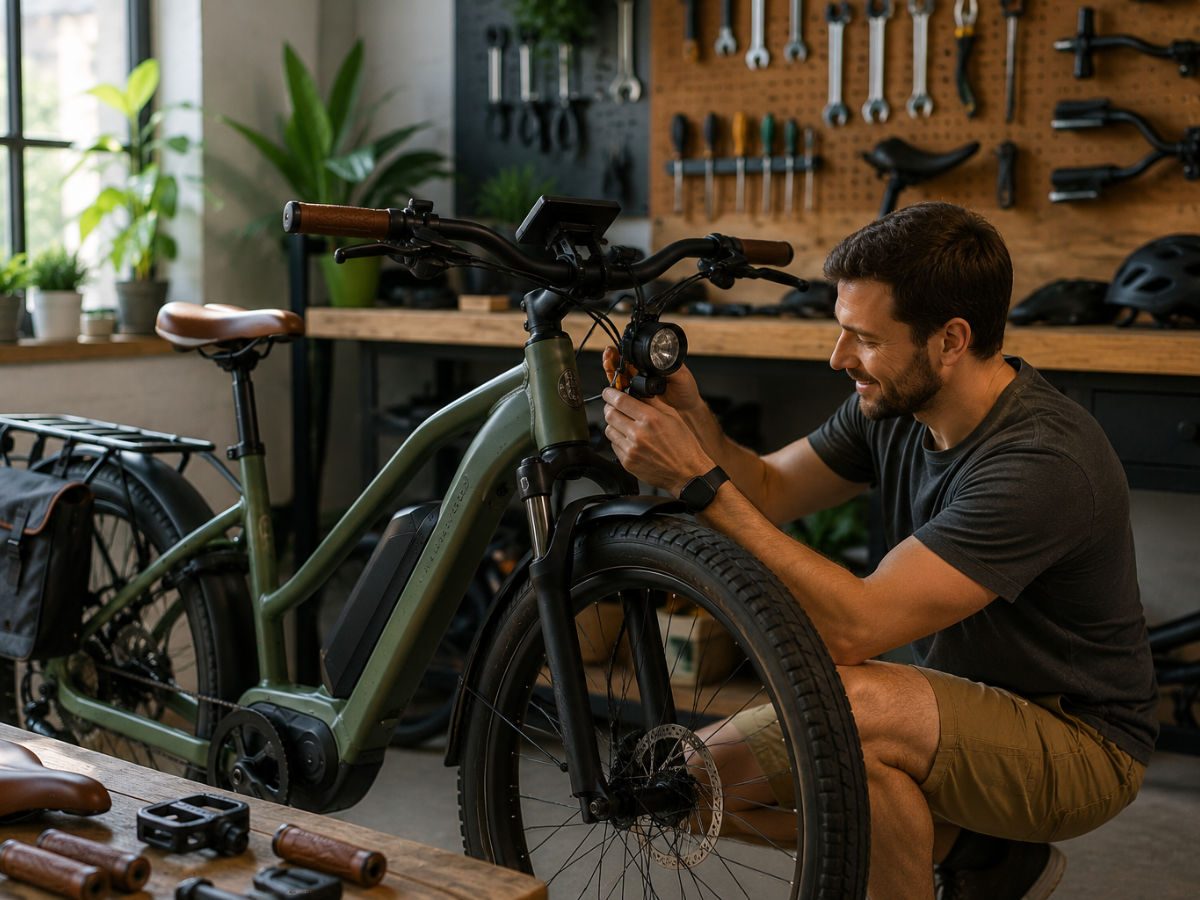
As more people look for practical ways to reduce their environmental impact, e-bikes have emerged as an efficient alternative to traditional transportation.
By replacing many short car trips, they offer a cleaner way to commute, run errands, and explore local communities while using far less energy than conventional vehicles.
The environmental benefits of e-bikes extend beyond lower emissions. They can help reduce traffic congestion, decrease fuel consumption, improve urban air quality, and lessen noise pollution in busy areas.
Because they require fewer resources to operate, e-bikes also support more sustainable everyday travel without sacrificing convenience.
This guide explores how e-bikes contribute to a greener future and why they have become an increasingly popular choice for environmentally conscious riders and communities alike.
Environmental Benefits That Make E-Bikes a Greener Choice
How Much of an Environmental Difference Can an E-Bike Make?

The environmental benefits of an e-bike become clearest when it replaces trips that would otherwise be made by car. E-bikes produce no tailpipe emissions while riding, and their electric motors require relatively little energy to provide pedal assistance.
Charging the battery still uses electricity, so e-bikes are not completely emission-free across their full lifecycle. Battery manufacturing, electricity generation, and eventually recycling or disposal all contribute to their environmental footprint.
Even with those factors considered, e-bikes offer an efficient way to handle many everyday trips without burning gasoline at the point of use.
The biggest difference comes from how the bike is actually used. Replacing a car trip to work, the grocery store, a nearby appointment, or another local destination has more environmental value than simply adding an e-bike ride to transportation habits that were already car-free.
How Do E-Bikes Compare With Cars and Traditional Bicycles?
Traditional bicycles remain the simplest option from an energy-use standpoint because the rider supplies the power. E-bikes sit between conventional bicycles and cars, combining human effort with a small electric motor that makes longer distances, hills, and heavier loads easier to manage.
| Transportation Method | Tailpipe Emissions While Riding | Primary Energy Source |
|---|---|---|
| Gas-powered car | Yes | Gasoline |
| Traditional bicycle | No | Human power |
| E-bike | No | Rechargeable battery and human power |
That middle ground is important. A traditional bicycle may use less energy, but not every rider can realistically use one for a longer commute, a hilly route, or a trip carrying groceries or other cargo. Electric assistance can make cycling practical for trips that might otherwise require a car.
This is one reason the environmental benefits of e-bikes cannot be measured by energy consumption alone. Their value also depends on whether electric assistance makes low-impact transportation realistic enough for people to use regularly.
When Does Switching to an E-Bike Make the Biggest Difference?
An e-bike has the greatest potential to reduce transportation-related emissions when it replaces frequent car journeys. Short urban trips can be particularly well suited to e-bikes because riders can avoid fuel use while also sidestepping some of the practical frustrations associated with driving, such as traffic and parking.
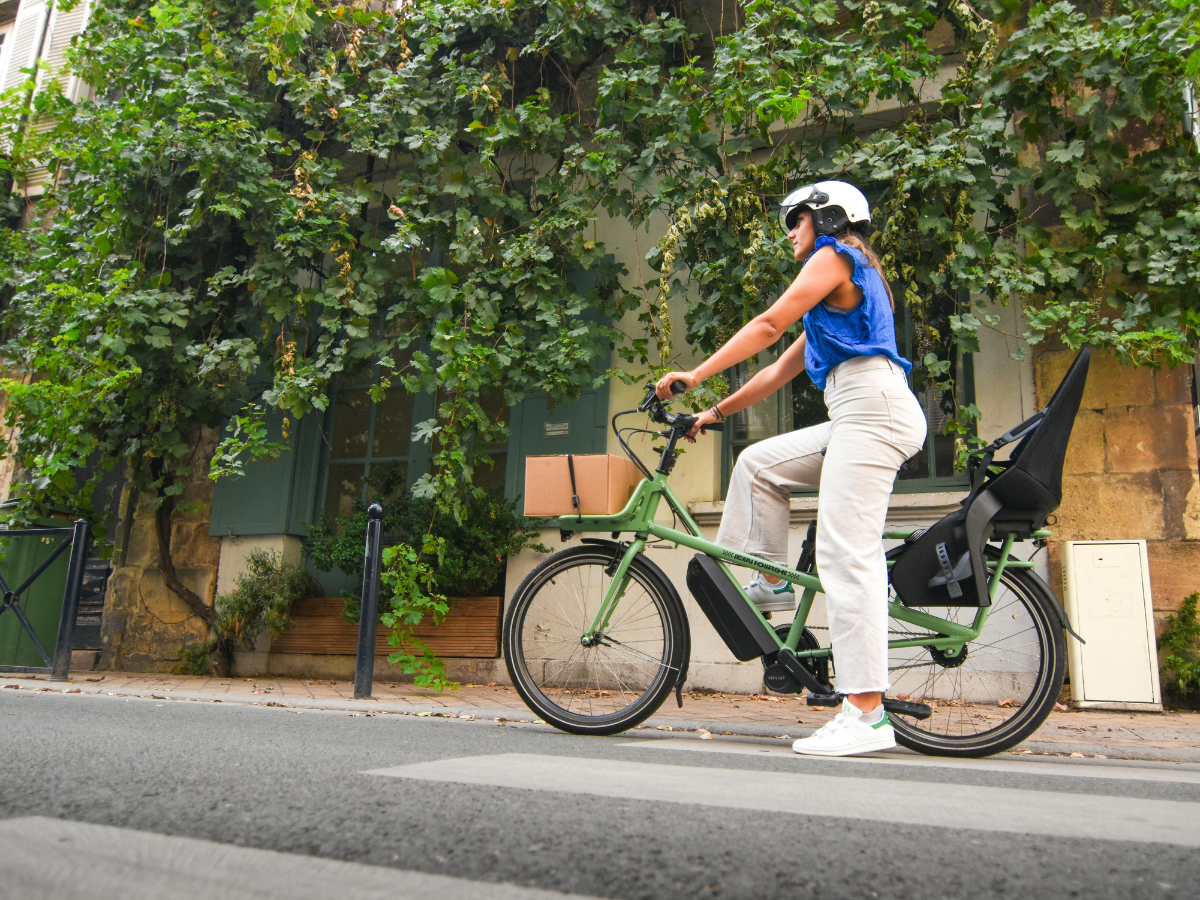
Consider the trips you make during a typical week. A commute within comfortable riding range, a grocery run with panniers or a cargo rack, a trip to a nearby restaurant, or a quick errand may not require a car at all once electric assistance is available.
Replacing even some driving with an e-bike can also provide benefits beyond fuel savings:
- Less local air pollution: E-bikes do not produce exhaust while being ridden.
- Lower energy demand: Moving an e-bike and rider generally requires much less energy than moving a passenger vehicle.
- Less road and parking space: Bikes require considerably less space than cars for both travel and storage.
- Quieter transportation: Electric bicycle motors operate without the engine noise associated with gasoline-powered vehicles.
These advantages become more meaningful when e-bike use becomes part of a regular transportation routine rather than an occasional recreational activity.
What About the Environmental Impact of E-Bike Batteries?
Battery production is an important part of the environmental picture and should not be ignored. Most modern e-bikes use rechargeable lithium-ion batteries, which require raw materials and energy to manufacture.
Battery care can therefore play a role in reducing the long-term footprint of e-bike ownership. Following the manufacturer’s charging and storage recommendations, protecting the battery from extreme temperatures, and replacing it only when necessary can help owners get the most useful life from the battery.
Responsible end-of-life handling matters as well. E-bike batteries should not be placed in household trash. When a battery eventually reaches the end of its usable life, riders should look for an appropriate battery recycling or collection program in their area.
How Can Atlanta Riders Make E-Bike Commuting More Sustainable?
Choosing the right bike is only the beginning. A model that comfortably handles your actual commute, terrain, cargo needs, and typical riding distance is more likely to replace car trips consistently.
Atlanta riders can visit ElectroBike Georgia to compare different e-bike styles in person and determine which setup makes sense for their routine. Test riding can be especially useful for understanding how much assistance you need for hills, longer distances, or everyday cargo.
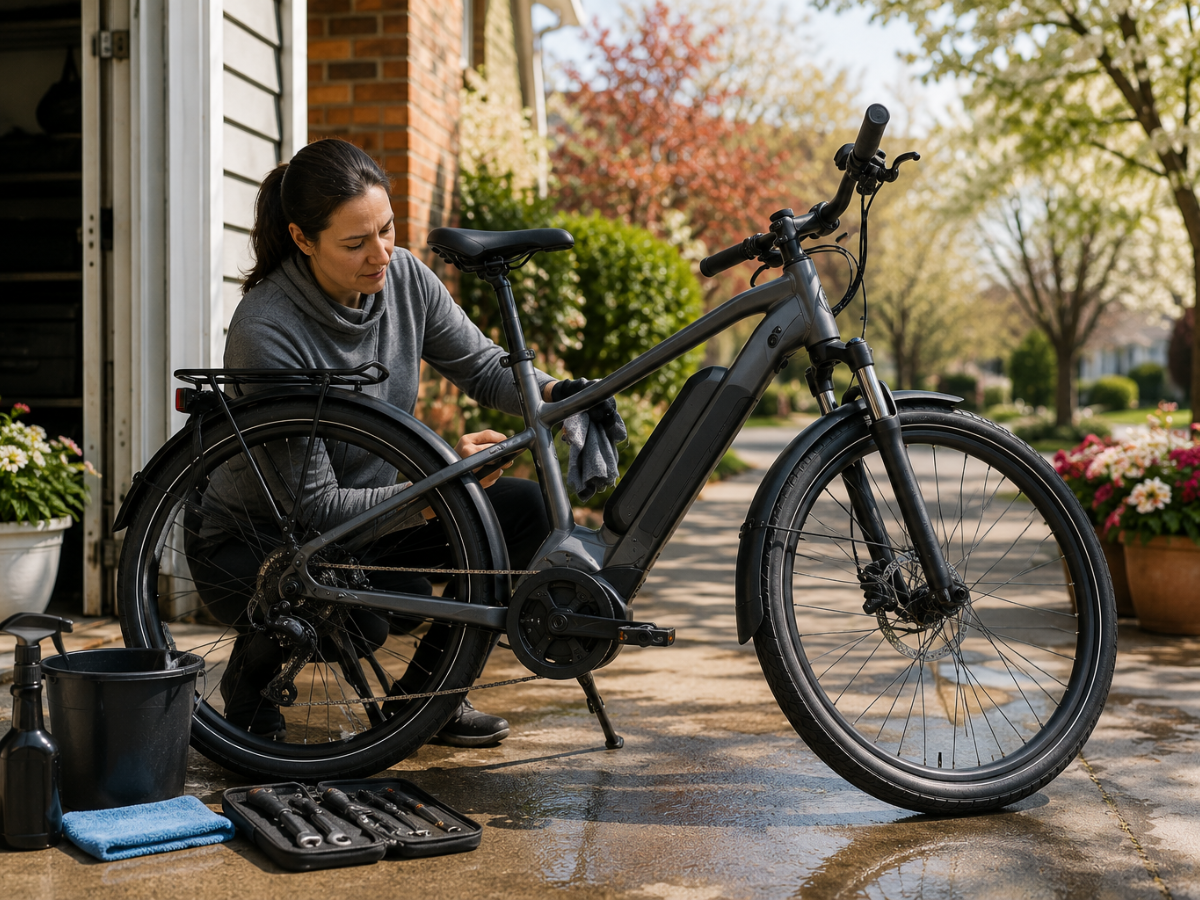
Regular maintenance matters, too. Proper tire pressure, responsive brakes, a clean drivetrain, and a well-maintained electrical system help an e-bike operate as intended and can extend the useful life of its components.
Ultimately, the environmental benefits are strongest when an e-bike becomes transportation you genuinely use. If electric assistance makes it practical to leave the car parked for commuting, errands, and other everyday trips, a relatively small change in how you travel can add up over time.
Can an E-Bike Replace Your Car in Atlanta?

For many Atlanta residents, an e-bike can replace at least some of the trips normally made by car. Commuting to work, picking up a few groceries, meeting friends, visiting a nearby park, or connecting with public transit may all be realistic without starting the car.
That shift can have practical and environmental benefits. Every car trip replaced by an e-bike eliminates tailpipe emissions from that journey while reducing gasoline use. Riders may also spend less on fuel and parking while avoiding some of the frustration that comes with driving short distances through busy areas.
Complete car replacement is not realistic for everyone. Someone with a manageable commute and limited passenger needs might use an e-bike most days, while a household that regularly makes long-distance trips or transports several people may use one as a second transportation option.
The more useful question is often not “Can I give up my car?” but “How many of my current car trips could I comfortably make by e-bike?”
Which Type of E-Bike Works Best for Daily Transportation?
The best e-bike is not necessarily the fastest or most powerful model. It is the one that fits the trips you actually make.
| E-Bike Type | Best For |
|---|---|
| Cruiser | Comfortable neighborhood rides and relaxed commuting |
| Folding e-bike | Apartments, limited storage, and multimodal commuting |
| Electric trike | Extra stability and carrying capacity |
| Lightweight e-bike | Commuters who prioritize agility and easier handling |
| Electric mountain bike | Hills, trails, parks, and rougher terrain |
Before choosing a model, map out a typical week. Consider how far you travel, whether your route includes significant hills, where the bike will be stored, and what you routinely carry.
Cargo needs deserve particular attention. A commuter carrying only a laptop has very different requirements from someone planning to haul groceries or other everyday supplies. Racks, baskets, and panniers can make an e-bike considerably more useful as a genuine car alternative.
How Does Replacing Car Trips Increase the Environmental Benefits?
Simply owning an e-bike does not automatically reduce your transportation footprint. The environmental benefits become more meaningful when the bike actually replaces trips that would otherwise involve driving.
This is where practicality matters. If an e-bike is uncomfortable, lacks enough range, cannot carry what you need, or is difficult to store, you may continue reaching for the car. Choosing a bike around your real routine makes regular use more likely.
Start by identifying the easiest car trips to replace. A nearby commute, grocery run, coffee shop visit, or trip to a transit station may be a more realistic starting point than trying to eliminate every car journey at once.
This approach also makes the environmental benefits more sustainable over time. Instead of treating e-bike ownership as an all-or-nothing lifestyle change, it becomes another transportation option that can gradually reduce dependence on driving.
Why Is a Test Ride Worth Doing Before You Buy?
Motor size, battery capacity, frame geometry, and other specifications can narrow your options, but they cannot tell you how a bike will actually feel.
A test ride lets you evaluate riding position, balance, braking, pedal assistance, handling, and comfort. It can also reveal practical details that are easy to overlook online, such as whether the bike feels too heavy to maneuver into your storage area or whether the riding position remains comfortable on a longer commute.
If you plan to use an e-bike regularly instead of a car, these details matter more than they would for an occasional recreational bike.
What Should You Look for in a Local E-Bike Shop?
Buying locally can be particularly valuable when an e-bike will become part of your everyday transportation. Unlike a conventional bicycle, an e-bike combines mechanical components with a motor, battery, controller, and electrical system. Access to knowledgeable service can make maintenance and troubleshooting easier over the life of the bike.
Look for a retailer that provides professional assembly, test rides, maintenance support, access to compatible replacement parts, and guidance on battery care.
Atlanta riders can visit ElectroBike Georgia to compare different e-bike styles in person and discuss which options fit their routes, storage needs, and riding habits.
Is an E-Bike a Practical Choice for Your Lifestyle?
A useful way to decide is to look at your transportation habits rather than asking whether an e-bike can replace a car completely.
Consider the trips you make most often. If many are within a comfortable riding distance and do not require transporting multiple passengers, an e-bike could take over a meaningful share of them.
Hills, longer distances, and moderate cargo needs that might discourage conventional cycling are also easier to manage with electric assistance.
That is ultimately where the environmental benefits and practical benefits meet. An e-bike does not have to replace every mile you drive to be worthwhile. If it becomes the easier choice for errands, commuting, and other routine journeys, it can reduce car use while giving you another flexible way to get around Atlanta.
How Much Money Can You Save With an E-Bike?
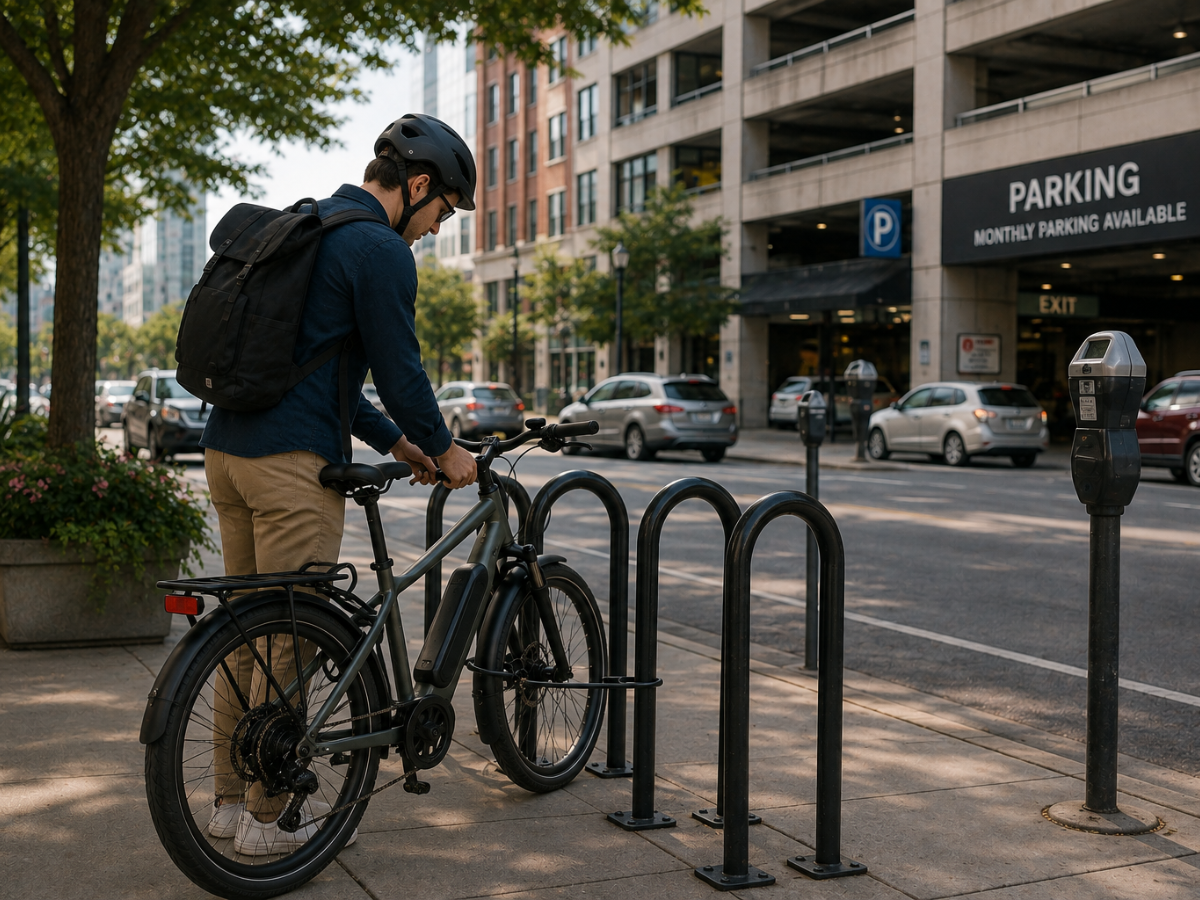
An e-bike can be more than a convenient way to get around. For riders who regularly replace car trips, it can also reduce everyday transportation expenses.
The exact savings depend on your routine. Someone who rides to work several days a week may save more than someone who uses an e-bike primarily on weekends.
The biggest opportunities usually come from reducing spending on gasoline, parking, and some of the mileage-related wear associated with frequent driving.
There is an upfront cost to consider, along with eventual expenses for maintenance and battery replacement. Still, when an e-bike becomes part of your regular transportation rather than an occasional recreational purchase, the lower operating costs can make a meaningful difference over time.
Those financial savings can complement the environmental benefits of driving less.
How Do E-Bike and Car Expenses Compare?
Cars and e-bikes have very different ownership costs. A car requires fuel, insurance, registration, maintenance, and potentially paid parking. An e-bike still needs maintenance and electricity, but its day-to-day operating expenses are generally much simpler.
| Expense | Car | E-Bike |
|---|---|---|
| Fuel or energy | Gasoline or diesel | Battery charging |
| Parking | May require paid parking | Often free bike parking |
| Routine maintenance | Oil, tires, brakes, fluids, engine and drivetrain service | Tires, brakes, chain, drivetrain and electrical checks |
| Insurance and registration | Common ownership expenses | Requirements vary by location and circumstances |
| Major component costs | Engine, transmission, electrical and other vehicle systems | Battery, motor and electrical components |
| Typical daily operating costs | Higher | Generally lower |
The comparison becomes especially relevant for short trips. Driving a few miles may not seem expensive in isolation, but repeated fuel purchases, parking fees, and additional vehicle mileage add up over months and years.
An e-bike battery also requires electricity to recharge, but charging is only one part of the ownership equation. Riders should account for tires, brake pads, drivetrain maintenance, professional service, and eventual battery replacement when calculating their real savings.
When Does an E-Bike Make the Most Financial Sense?
The strongest savings usually come from replacing trips you already make rather than adding recreational rides to your existing transportation habits.
An e-bike may offer particularly good value if you commute several days per week, regularly make short local trips, pay for parking, or use a second household vehicle mainly for errands and commuting.
Consider a household with two cars, for example. If an e-bike eventually allows that household to rely less heavily on the second vehicle, the potential savings can extend beyond gasoline. Depending on the circumstances, there may also be opportunities to reduce vehicle mileage and some associated ownership expenses.
Even without replacing a vehicle entirely, shifting a meaningful portion of weekly travel to an e-bike can make transportation costs easier to manage.
How Should You Calculate Your Potential E-Bike Savings?
Rather than relying on a generic savings estimate, compare an e-bike with what you currently spend.
Start with your typical monthly transportation costs, including fuel, parking, and other expenses directly associated with the trips you could realistically replace. Then estimate how many of those journeys could be completed by e-bike.
For example, if your commute is within comfortable e-bike range but longer weekend trips still require a car, calculate savings based on commuting rather than assuming you will stop driving altogether.
Remember to subtract the costs of e-bike ownership, including:
- Electricity for charging
- Routine maintenance
- Replacement tires, brake pads, chains, and other wear items
- Professional servicing when needed
- Eventual battery replacement
- Accessories such as a helmet, lock, lights, rack, or panniers
This gives you a much more realistic picture of potential savings than simply comparing the purchase price of an e-bike with the cost of a car.
Why Does Maintenance Matter to the Total Cost of Ownership?
Buying an e-bike is only the beginning of the financial calculation. How well the bike is maintained can affect reliability and how much you spend on repairs over time.
Regular brake checks, correct tire pressure, drivetrain maintenance, and proper battery care can help prevent smaller problems from turning into more expensive repairs.
Following the manufacturer’s recommendations for charging and storage is particularly important because the battery is one of the more expensive components of an e-bike.
Access to qualified service also matters when evaluating a purchase. A bargain-priced bike becomes less attractive if compatible parts are difficult to source or local technicians cannot service its electrical system.
Is a More Expensive E-Bike Sometimes the Better Value?
It can be. Purchase price alone does not tell you whether an e-bike will be economical over several years.
Consider build quality, battery capacity, component availability, warranty coverage, serviceability, and whether the bike actually suits your daily transportation needs.
Paying more for a model you use consistently may provide better value than buying a cheaper bike that is uncomfortable, difficult to maintain, or poorly suited to your commute.
The same principle applies to both financial and environmental benefits: an e-bike delivers the most value when it is practical enough to use regularly.
The goal is not simply to spend less upfront. It is to choose a bike that can realistically replace enough car trips to lower transportation costs for years to come.
What Should You Consider Before Buying an E-Bike?

An e-bike is a significant purchase, and comparing models by price or motor power alone can lead you toward a bike that does not actually suit your routine. Start with how you expect to use it.
A daily commuter may prioritize dependable range, comfortable geometry, integrated lights, and cargo capacity. Someone riding mainly for recreation might care more about handling, weight, and ease of use. If reducing car trips is part of your goal, the bike also needs to be practical enough to choose consistently over driving.
Before shopping, think through a few basics:
- How far do you typically travel in a day?
- Does your route include steep hills or rough surfaces?
- Will you carry groceries, work equipment, or other cargo?
- Where will you securely store the bike?
- Do you have a convenient place to charge the battery?
- Can the bike be serviced locally if something goes wrong?
These questions are more useful than simply looking for the largest battery or highest-powered motor. Paying for capabilities you rarely need adds cost without necessarily improving the ownership experience.
How Much Battery Range Do You Actually Need?
Advertised range can be useful for comparing bikes, but it should not be treated as a guarantee. Actual battery range can change based on rider weight, terrain, weather, tire pressure, cargo, assistance level, and riding habits.
Rather than choosing a battery based on the longest advertised distance, consider your normal round trip and leave some extra capacity for unexpected detours, hills, or days when you use more motor assistance.
Battery size can also affect price and weight. If most of your rides are relatively short, paying substantially more for maximum range may offer little practical benefit. On the other hand, commuters who cannot recharge during the day may benefit from additional capacity.
What Matters More Than the Initial Purchase Price?
A lower-priced e-bike is not automatically the less expensive option over the long term. Serviceability, component quality, warranty coverage, and replacement-part availability all affect the true cost of ownership.
| Consideration | Why It Matters |
|---|---|
| Battery | Affects range, bike weight, charging needs, and eventual replacement cost |
| Motor system | Influences assistance, ride characteristics, and service requirements |
| Brakes and drivetrain | Affect everyday performance and require routine maintenance |
| Warranty | Provides coverage for qualifying defects and component problems |
| Replacement parts | Determines how easily the bike can be maintained as it ages |
| Local service | Gives you somewhere to turn for adjustments, diagnostics, and repairs |
It is also worth asking what happens several years after the purchase. Can you obtain a compatible replacement battery? Are electrical components serviceable? Can a local technician diagnose the motor system?
Those questions may not feel important during a test ride, but they can make a major difference to long-term value.
How Does Your Purchase Affect the Environmental Benefits?
If sustainability is part of your reason for buying, think beyond the fact that an e-bike has no tailpipe emissions while riding. The environmental benefits depend partly on how long the bike remains useful and how often it replaces transportation with a higher environmental footprint.
A durable, repairable bike that you ride frequently may be a better long-term choice than an inexpensive model that becomes difficult to repair when a proprietary component fails.
Battery care matters here as well. Following manufacturer recommendations for charging, storage, and temperature exposure can help protect battery performance. When a battery eventually reaches the end of its useful life, it should be handled through an appropriate recycling or collection program rather than discarded with household waste.
The strongest environmental benefits ultimately come from choosing an e-bike that works well enough for your lifestyle that you continue using it.
Why Is a Test Ride Important Before Buying?
Online specifications can tell you about motor output, battery capacity, frame size, and components. They cannot tell you whether the bike feels right.
During a test ride, pay attention to how naturally the bike fits your body, how smoothly the motor assistance engages, whether the brakes feel predictable, and how comfortable you are maneuvering at lower speeds.
Weight deserves attention too. E-bikes are generally heavier than conventional bicycles. If you need to carry yours upstairs, lift it onto a rack, or maneuver it through a narrow storage area, that extra weight can become an everyday issue.
Testing several models back to back can make differences that seemed minor on paper much easier to recognize.
Why Does Local Service Matter for Long-Term Ownership?
An e-bike combines conventional bicycle components with a battery, motor, controller, sensors, and other electrical parts. That makes access to qualified service particularly useful.
Before buying, ask whether the retailer can perform routine maintenance, diagnose electrical problems, obtain replacement components, and provide support for the motor and battery system used on the bike.
The goal is not to find the e-bike with the longest specification sheet. It is to find one that you can comfortably afford, maintain, and use regularly. That combination creates better long-term value while making the practical and environmental benefits of e-bike ownership much more likely to last.
Frequently Asked Questions About E-Bikes and Their Environmental Benefits
Do E-Bikes Produce Tailpipe Emissions?
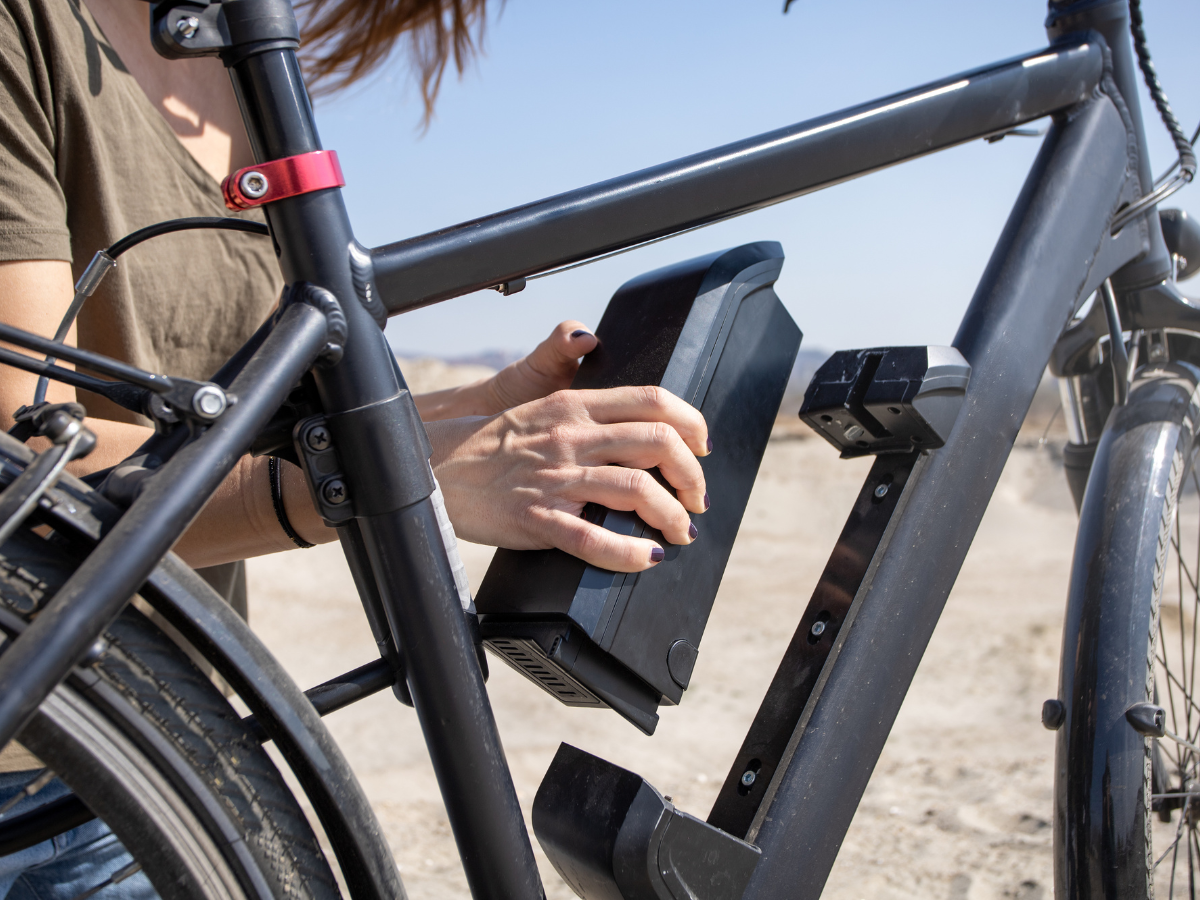
No. E-bikes produce no tailpipe emissions while riding because they do not burn gasoline or diesel. The motor draws electricity from a rechargeable battery and assists the rider while pedaling.
Charging that battery still requires energy, so e-bikes are not completely emissions-free when their full lifecycle is considered. However, their low energy requirements are an important part of the environmental benefits they can offer compared with conventional motor vehicles.
Are E-Bikes Better for the Environment Than Cars?
For many everyday trips, e-bikes have a lower environmental impact than gas-powered cars. They require much less energy to move a rider and produce no exhaust emissions during operation.
The full comparison is more complicated because manufacturing the bike and battery creates emissions, and the impact of charging depends partly on how electricity is generated.
Even with those factors considered, replacing car journeys with e-bike trips can reduce the transportation footprint associated with regular commuting and errands.
Can an E-Bike Replace a Car for Daily Commuting?
It can replace many car trips, although whether it can replace a car entirely depends on the rider.
Commute distance, road conditions, weather, cargo needs, secure parking, and access to suitable cycling routes all influence how practical the switch will be.
Some Atlanta riders may be able to commute primarily by e-bike, while others may find it more useful as an alternative for shorter trips while keeping a vehicle for longer journeys.
Even partial car replacement can contribute to the environmental benefits of e-bike ownership.
How Far Can an E-Bike Travel on a Single Charge?
There is no universal e-bike range. Battery capacity, terrain, rider and cargo weight, tire pressure, weather, speed, and the level of motor assistance can all affect how far a bike travels between charges.
Manufacturer range estimates are useful for comparing models, but riders should consider their actual round-trip distance rather than relying on the maximum advertised figure. Choosing a battery with some additional capacity also provides flexibility for hills, detours, and heavier use of pedal assistance.
How Much Does It Cost to Charge an E-Bike?
Charging an e-bike generally requires far less energy than fueling or charging a car, but the exact cost depends on the battery’s capacity and local electricity rates.
For buyers comparing models, battery capacity is usually listed in watt-hours (Wh). A larger battery stores more energy and may provide greater range, but it can also add weight and cost. Rather than choosing the largest battery available, look for one that comfortably supports your normal riding distance.
What Happens to an E-Bike Battery at the End of Its Life?
Lithium-ion e-bike batteries should not be placed in household trash or standard curbside recycling. They require appropriate handling because damaged or improperly discarded lithium-ion batteries can create fire and safety risks.
When a battery reaches the end of its useful life, riders should look for an approved battery recycling or collection program and follow the battery manufacturer’s disposal guidance. Responsible battery handling is an important consideration when evaluating the long-term environmental impact of e-bike ownership.
Is an E-Bike a Good Long-Term Investment?
It can be, particularly for someone who expects to use it regularly for commuting, errands, or other trips that would otherwise require a car.
The calculation goes beyond the purchase price. Consider battery replacement, routine maintenance, replacement-part availability, warranty coverage, and access to qualified service.
A well-supported e-bike that remains repairable and useful for years can provide better long-term value than a cheaper model that becomes difficult to maintain.
For riders motivated by sustainability, longevity matters too. The environmental benefits become more meaningful when an e-bike is maintained, ridden regularly, and kept in service rather than replaced prematurely.
Conclusion
E-bikes offer an environmentally friendly way to travel by reducing vehicle emissions, lowering fuel consumption, and providing an efficient alternative to many short car trips.
Whether you’re commuting to work, running errands, or simply enjoying the outdoors, choosing an e-bike can help reduce your environmental impact while promoting a healthier, more active lifestyle.
As more riders embrace sustainable transportation, investing in a quality e-bike is a practical step toward a greener future. For premium e-bikes, expert guidance, and exceptional customer service, choose ElectroBike Georgia.
If you’re ready to experience the benefits of eco-friendly transportation, call (404) 400-7132 to speak with the team at ElectroBike Georgia, or contact us today to find the perfect e-bike for your lifestyle.